Join us for the Smart Buildings Exchange 2026!

Smart Buildings Center

Energy Efficiency Innovation Center, Tool Library & Data Visualization

  • About
    • Staff
    • Board of Directors
    • Contact
    • Donate
  • Partners
    • Partner Benefits
  • Tool Library
    • Browse Inventory
    • Case Studies
    • Lending Library Policy
    • Customer Agreement
    • Tool Resources
  • Use Our Space
    • Training/Event Space
    • Large Conference Room
  • Training
    • Building Operator Certification
    • Remote Learning Calendar
    • Remote Learning Library
    • Qualified Energy Manager Training
  • Resources
    • Clean Buildings Performance Standard Helpdesk
    • Building Efficiency and Clean Operations Network (BEACON) Fellow Project
    • K-12 Ventilation & Indoor Air Quality Resources
  • Compliance
    • WA State Clean Buildings Performance Standard (CBPS)
    • City of Seattle Benchmarking Helpdesk
  • Events
    • SBX Conference
  • Blog

The Essential Role of Smarter Buildings in the Clean Energy Transition

October 31, 2022 By SBC staff

Increasingly, across the United States and abroad, building owners are implementing comprehensive Environmental, Social and Governance (ESG) programs. ESG programs provide a framework for assessing and managing risks stemming from a range of environmental, social and governance factors. This trend is fueled in part by an increasing understanding of the looming danger of climate change across a range of potential outcomes from financial risk to human health and wellbeing. In many jurisdictions, the push for ESG reporting is also coming from the regulations that are being imposed on buildings, largely driven by the urgency around climate mitigation actions. It is widely accepted that climate warming stops when Greenhouse Gas emissions stop. In the US and elsewhere, this is leading policymakers to focus on greenhouse gas mitigation through regulation of emissions. By far, the two largest sources of emissions in the United States are transportation and buildings. If we are to stop or even slow climate change, we need to lower emissions from cars and buildings.

Policies aimed at buildings take two different approaches. The first is to target buildings directly through regulation of building site emissions, such as the forthcoming commercial building performance standard from the City of Seattle. The second approach targets the energy system that provides buildings with electricity, space and water heating. Policies aimed at decarbonizing the energy system ultimately affect the availability and pricing of electricity and other energy fuels, and often come in the form of policies that regulate power sources. In Washington State, the legislature passed the Clean Energy Transformation Act, which seeks to eliminate carbon from electricity requiring electric utilities to shift to carbon free power sources. Given this plan to decarbonize electricity in Washington State, the state energy strategy recommends an overall electrification pathway (for buildings and transportation alike) as the least cost pathway to meeting the state’s greenhouse gas emissions targets. The authors of the strategy point out that such a pathway will increase the electrical load by roughly 92% over the 2020 level. You hear similar estimates from other states and even national calculations. In the climate space, there is widespread agreement that to stop climate change, we need to achieve net zero carbon emissions by 2050 and that “clean electricity” fueling our buildings and transportation is essential to success, but it will require a groundswell of innovation and new technologies to get there.

What does this mean for buildings? What role do smart buildings play in the clean energy transition? Will this all amount to increased costs in building ownership or are there financial benefits and opportunities for building owners who convert to smart technologies to support the transition? At the Smart Buildings Center (SBC), these are questions we have been asking industry leaders and will continue to explore in our programming. We believe smart buildings have an essential role to play in the transition to a carbon free economy and we believe there is great economic potential for building owners who lead this transition with grid-interactive technologies, systems that align with grid needs and clean power production, onsite battery storage, onsite EV charging and innovations around how those technologies are leveraged, and more smart technologies, approaches, and practices that will recruit high tenancy and support the social and economic goals of the community in which they reside.

We plan to continue to push these discussions through the SBC programming, stay tuned for more to come along these lines, and in the meantime, check out the recordings from some of the discussions that have already taken place—and don’t miss this blog post from our partner organization, NEEC.

2020

  • Smart Buildings Week – Grid-Enabled Efficient Buildings

2021

  • Smart Buildings Exchange 2021 – Opening Plenary Panel – Smarter Buildings and a Changing Utility – a Vision of the New World of Energy
  • Smart Buildings Exchange 2021 – Grid-Interactive Efficient Buildings
  • Smart Buildings Exchange 2021 – Buildings and Carbon
  • Smart Buildings Exchange 2021 – Deriving Value from Smart, Interactive Buildings

2022

  • SBC Executive Forum – Electrification & Grid-Interactive Efficient Buildings, part 1
  • SBC Executive Forum – Electrification & Grid-Interactive Efficient Buildings, part 2
  • Smart Buildings Exchange 2022 – Senior Executives Discuss the Future of Energy Services and the Built Environment
  • Smart Buildings Exchange 2022 – Building Performance Reporting – How Smart Technology Can Help
  • Smart Buildings Exchange 2022 – Grid-Interactive Efficient Buildings
  • Smart Buildings Exchange 2022 – the Role of Smart Buildings in Reducing Carbon Emissions
Filed Under: SBC News

Seattle 2030 District 2022 Energy Competition

September 29, 2022 By SBC staff

Seattle 2030 District is hosting its 2022 Energy Competition that will offer viable energy saving solutions to an affordable housing building that will serve as a model for the clean energy future through exemplary building performance. The competition is underway and the winner will be announced in November – December, however, they are still accepting teams if you’re interested in getting involved.

Learn more here!

Filed Under: SBC News

SBC Welcomes New Partner: Aeroseal!

September 22, 2022 By SBC staff


The Smart Buildings Center is excited to welcome Aeroseal as a new Smart Buildings Center Education Program Partner!

Aeroseal’s beginning dates back to 1993 when Dr. Mark Modera invented a breakthrough aerosol-based sealing technology that made it possible to seal leaks and holes in air ducts from the inside out. Dr. Modera then teamed up with Amit Gupta, a heating and air industry leader, and they’ve since been committed to making the world a better place by improving the air occupants breathe in buildings and reducing buildings’ energy usage at the same time.

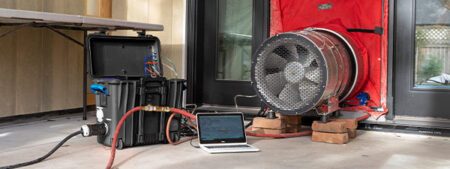
Aeroseal audits and tests buildings and then performs their innovative duct sealing technology that’s helped improve indoor air quality and occupant health and well-being in more than 150,000 projects nationwide. Their solution has helped clients in the Healthcare,  Hospitality,  Education, and CRE sectors improve indoor air quality while reducing energy usage and costs.

Learn more by downloading Aeroseal’s Commercial Solutions brochure and watching their Mission & Purpose video

Filed Under: SBC News

SBC Announces 2022 BOC Operator of the Year!

September 1, 2022 By SBC staff

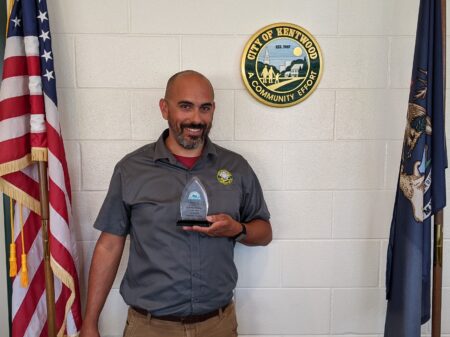
The Smart Buildings Center (SBC) and Building Operator Certification (BOC) program are proud to announce the 2022 BOC Operator of the Year: Matthew Wardell, Building Maintenance Supervisor for the City of Kentwood, Michigan.

Each year, BOC requests nominations for people working to improve the energy efficiency of their work environment using skills they learned in the BOC program. We received many impressive 2022 nominations detailing how methods learned in BOC classes are helping people make improvements in their work environments, but Matt’s story stood out among the rest.

In his role at the City of Kentwood, Matt manages nine city buildings, four of which are staffed 24 hours a day. Matt was pivotal in completing the Consumer’s Energy Building Tune Up Program in four City of Kentwood owned buildings from 2020 to 2022. The buildings were benchmarked using Energy Star Portfolio Manager, and all four buildings were significantly improved by Matt’s efforts. His BOC training and hard work translated into the following:

  • Energy savings in the four buildings of a total 586,592 kWh annually
  • $46,927 in annual electric cost savings
  • Energy savings equaling 21% of the total buildings’ energy use
  • The City Hall’s Energy Star score increased by 114%
  • The City Hall’s Energy Usage Intensity (EUI) decreased by 23.5%

Matt believes BOC training is valuable because it touches on the many different aspects of energy conservation. He has found BOC training to be helpful as it builds and expands on knowledge in the many different areas of operating healthy and efficient buildings. The thing he enjoys most about his work is having a positive impact.

The SBC and BOC program applaud Matt on his efforts to improve the City of Kentwood’s building energy performance and congratulate him on being named as 2022 BOC Operator of the Year!

Know someone who deserves recognition for their work in the industry? Nominations will open for the 2023 BOC Operator of the Year award in May, so stay tuned!

Filed Under: Education & Training, SBC News

SBC Celebrates Success of Portland Green Janitor Education Program

September 1, 2022 By SBC staff

The Smart Buildings Center (SBC) is proud to partner with SEIU Local 49 to support the Portland Green Janitor Education Program (GJEP). The GJEP is a national program developed by the Building Skills Partnership with the U.S. Green Building Council-Los Angeles (USGBC-LA), the Building Owners and Managers Association of Greater Los Angeles, and the Service Employees International Union. The program is a qualified USGBC program through which janitors are accredited in green building cleaning practices to help meet the latest energy, water, and environmental sustainability standards. The GJEP curriculum addresses energy efficiency, recycling, waste management, water conservation and other sustainable and green cleaning practices.

The GJEP is certified by USGBC and qualifies buildings for an additional point on LEED certification applications. According to a SeedLA report, 76% of buildings that have utilized the program to educate their staff have seen reductions in energy and water use, and on average participating buildings use 5.6% less energy than non-participating buildings.

The program in Portland is financed through partnerships between building owners, janitorial companies, SEIU Local 49, and grant funding provided by the Portland Clean Energy Fund. So far, Able and ABM janitors at four Portland office towers owned by American Assets Trust and Unico Properties have completed the program.

Recent GJEP graduates at the Moda Tower in Portland proudly display their certificates. Photo credit: SEIU Local 49

The GJEP compliments SBC’s mission to enable a cleaner, healthier and more productive future through the use of smart technologies and practices in the built environment. SBC delivers and promotes training programs to educate and elevate the building workforce of the future, providing a career and credential pathway for individuals to obtain a meaningful career in facilities.

“Janitors are on the frontlines of building operations, noticing trends and potential areas of improvement for occupancy comfort and energy savings before anyone else in the building” said Shino Severson, SBC Senior Project Manager. “By investing in training janitorial staff, organizations invest in their future to promote individuals throughout the organization, experience less employee turnover, and realize short- and long-term achievements in improving the health, cleanliness and sustainability of their buildings.”

By increasing the recognition of the important role these individuals play in their buildings, the GJEP can help build the pipeline for those entering the field of facilities through credentials and training. This skilled workforce provides valuable energy and resource savings to building owners and organizations while helping to advance sustainability efforts.

“SEIU Local 49 members appreciate the partnership with SBC to work together for a cleaner future for all” said Scott Cheesewright, SEIU Local 49 Assistant Director of Property Services Organizing. “We’re thrilled that janitors become involved more closely in important building processes and decisions around energy and water use, waste stream management, green chemicals, and workplace health and safety through this critical program.”

To learn more, watch the GJEP promotional video and read the SEIU Local 49 program update.

Filed Under: Education & Training, SBC News

Smart Buildings Exchange 2022 Session Recordings Available!

August 30, 2022 By SBC staff

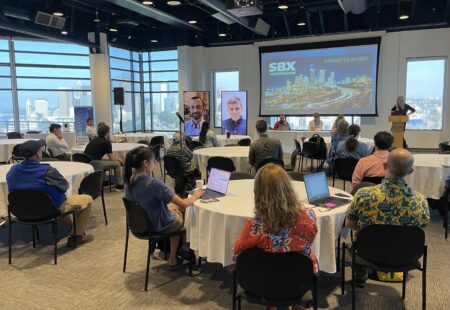
Last week the second annual Smart Buildings Exchange (SBX) delivered a value-packed three days of conversations focused on the market opportunity for smart buildings and their role in our clean energy future.

The conference kicked off with an Opening Plenary session featuring Darlene Pope, President of Planon, North America, who is a globally recognized subject matter expert and visionary in the smart building industry with more than 30 years of experience in commercial real estate, technology, and smart building consulting.

Following the Opening Plenary session were sessions on Grid-Interactive Efficient Buildings, Building System Interoperability, Demystifying Digital Twin Technology, and Making Existing Buildings Smarter.

The second day of the conference began with a Plenary Session during which Ash Awad, the Chief Market Officer for McKinstry, moderated a panel where senior executives: Debra Smith of Seattle City Light, Wayne O’Connor of Creative Energy, David Woodson of University of Washington, Greg Smith of Urban Visions, and Andy Wappler of Puget Sound Energy discussed the future of energy services and the built environment. The day continued with sessions on the Role of Smart Buildings in Reducing Carbon Emissions, Workforce Development Opportunities, Achieving and Maintaining Indoor Environmental Quality, and Making Smart Actionable.

The third and final day of the conference featured an in-person discussion on building performance data and how smart technologies can help building owners and managers in fulfilling requirements related to energy and ESG reporting. The session was also live streamed for virtual participation, and it was great to convene in a hybrid format for the first time in nearly three years!

All SBX session recordings are now available on the Smart Buildings Center YouTube Channel so you can watch any you missed and rewatch any you enjoyed.

Thank you to all sponsors, planning committee members, speakers, and attendees who helped make the event a success!

Filed Under: Education & Training, Featured Event, SBC News, SBX, Webinars

Posts pagination

Previous Page 1 … Page 15 Page 16 Page 17 Page 18 Page 19 … Page 46 Next

Help fund our Education Program

DONATE TODAY

Sign up for updates

Join the Smart Buildings Center mailing list for information about events and smart buildings news.

Your email has been added to the Smart Buildings Center mailing list for information about events and smart building news.

News & Articles

SBX 2026 Last Chance to Register!

November 4, 2026

11/17 NEEA and UW Present: Thermal Bridging in High-Performance Buildings: Visualizing Better Enclosure Design

October 29, 2026

Free OR Energy Benchmarking Training 11/16

October 28, 2026

11/5 WA Clean Buildings Performance Standard Open House

October 27, 2026

This Friday: Tool Time Lunch and Learn: Identifying Opportunities for Operational Improvement

October 26, 2026

Contact Us

Smart Buildings Center
Pacific Tower
1200 12th Ave. S., Suite 110
Seattle, WA 98144

206-538-0832

[email protected]

Smart Buildings Center is a project collaboration with Building Potential


Smart Buildings Center · Pacific Tower, 1200 12th Ave. S., Suite 110, Seattle, WA 98144 · 206-538-0832

© 2026 · Northwest Energy Efficiency Council