2025 Smart Buildings Exchange Recap

Smart Buildings Center

Energy Efficiency Innovation Center, Tool Library & Data Visualization

  • About
    • Staff
    • Board of Directors
    • Contact
    • Donate
  • Partners
    • Partner Benefits
  • Tool Library
    • Browse Inventory
    • Case Studies
    • Lending Library Policy
    • Customer Agreement
    • Tool Resources
  • Use Our Space
    • Training/Event Space
    • Large Conference Room
  • Training
    • Building Operator Certification
    • Remote Learning Calendar
      • Submit Event
    • Remote Learning Library
    • Qualified Energy Manager Training
    • Washington State Controls Specialist Apprenticeship
  • Resources
    • Clean Buildings Performance Standard Helpdesk
    • Energy Benchmarking Helpdesk & Resources
    • Building Efficiency and CLean Operations Network (BEACON) Fellow Project
    • Oregon Building Energy and Performance Fellowship Project (OBEP)
    • K-12 Ventilation & Indoor Air Quality Resources
  • Events
    • SBX Conference
  • Blog

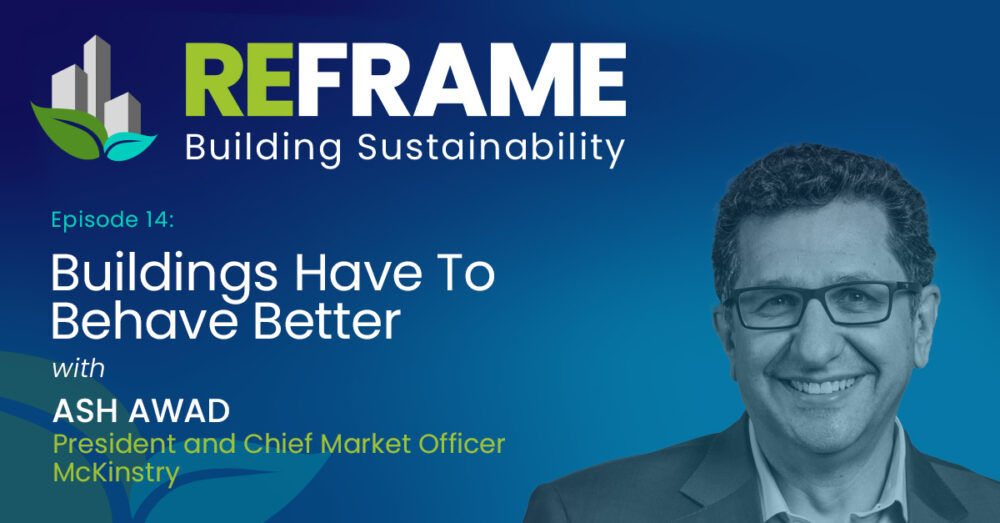
REFRAME Podcast: Buildings Have To Behave Better

January 21, 2026 By SBC staff

Show host Jeff Nichols speaks with Ash Awad, President and Chief Market Officer at McKinstry, and a longtime leader at the intersection of buildings, energy systems, and climate innovation. Drawing on more than 30 years of experience, Ash shares his thoughts on how the built environment must fundamentally change over the next decade and challenges long-held assumptions about buildings and utilities.

Ash paints a compelling picture of a future where buildings are no longer part of the problem, but a central solution—actively supporting the grid, the environment, and human well-being. The transformation ahead is complex, but inevitable, and the time to rethink how buildings behave is now.

Listen now on Pilotlight: Reframe Podcast | Learn Sustainability Trends – Join Us — Pilotlight Solutions
Filed Under: Webinars

Upcoming NEEA Webinars

January 20, 2026 By SBC staff

Registration will be opening soon for the remaining four webinars in the Commercial Whole Building Market Insights series. Visit the registration page to learn more. 


Webinar #2
: February 12 | Presented by Building Potential

Clean Buildings Performance Standard: Market Challenges & Opportunities


Webinar #3
: March 26 | Presented by ETHNO

Market Transformation Concept Design Research


Webinar #4
: April 30 | Presented by Hayden Tanner

From Policy to Practice: Lessons Learned from Building Performance Standards Implementation


Webinar #5
: May 14 | Presented by NEEA

Insights from NEEA’s Commercial Building Stock Assessment

Learn more at the NEEA Registration Page here

Filed Under: Webinars

5 Facility Operations Improvement Strategies Facilities Leaders Can Use Right Now

January 15, 2026 By SBC staff

Originally posted from FEA: 5 Facility Operations Improvement Strategies Facilities Leaders Can Use Right Now – FEA

Facility Operations Improvement Strategies

How small, focused changes can improve day-to-day operations and support long-term planning

Facilities leaders are under constant pressure to keep buildings running efficiently, respond to daily maintenance issues, and plan for what comes next – often with limited staff, tight budgets, and competing priorities. The pace of day-to-day demands can make it difficult to step back and focus on improvement, even when teams know changes are needed.

While long-term strategy and capital investment play an important role, meaningful facility operations improvement strategies do not always require major initiatives or new systems. Small, focused actions can create immediate momentum, reduce reactivity, and lay the groundwork for more sustainable, long-term progress. Here are five practical ways facilities leaders can improve facility operations right now.

  1. Get Clear on What Matters Most

When everything feels urgent, nothing is truly prioritized. Start by identifying the systems, spaces, or services that have the greatest impact on mission, productivity, and safety. This clarity helps teams focus efforts on where it matters most and reduces the time spent reacting to lower-value tasks.

  1. Break the Reactive Cycle

Reactive maintenance drains time, energy, and budgets. Look for repeat issues and temporary fixes that keep resurfacing. Even addressing one or two chronic problems can free up staff time, reduce disruptions, and improve overall reliability.

  1. Use the Data You Already Have

Most facilities teams have more data than they realize, from work orders and asset lists to condition assessment reports and maintenance histories. Reviewing and organizing this information can reveal patterns, risks, and opportunities for improvement without waiting for new tools or assessments. In some cases, tools like My Facility Plan can help organize and visualize this information, making it easier to turn existing data into clearer operational and capital planning insights.

Organizations such as the International Facility Management Association (IFMA) emphasize that small, targeted operational improvements and better use of existing data can significantly strengthen day-to-day facility performance while supporting long-term planning.

  1. Align Daily Operations With Long-Term Planning

Operations and capital planning often live in separate lanes, but they should inform each other. Use operational pain points to highlight where capital investment is needed and use long-term plans to guide daily decisions. Aligning day-to-day operations with long-term planning also makes it easier to tackle capital renewal in a more intentional way. We dig into this in our Facility Capital Renewal Planning blog, where we share practical approaches for prioritizing investments and addressing deferred maintenance over time.

  1. Focus on One Quick Win

Momentum matters. Identify one improvement that can be implemented quickly and visibly, whether it is a process change, a communication improvement, or a targeted maintenance effort. Quick wins build trust with leadership, energize teams, and create space for larger changes.

Final Thoughts

Improving facility operations is not about doing more work; it’s about doing the right work at the right time. When facilities teams have clarity around priorities, visibility into their assets, and alignment between day-to-day operations and long-term planning, they are better positioned to respond to challenges and reduce unnecessary strain on staff and budgets. These facility operations improvement strategies can generate incremental improvements that create a foundation for stronger performance, better decision-making, and greater confidence across the organization.

Over time, these operational shifts also make it easier to move from reactive problem-solving to proactive planning. As quick wins build momentum, facilities leaders gain the insight and credibility needed to advocate for smarter investments, improved processes, and long-term resilience. The result is an operations environment that not only keeps facilities running today but also supports the organization’s goals well into the future.

Check out FEA for more great content like this!

Filed Under: Resources

Energy Efficiency Jobs in America Report

January 15, 2026 By SBC staff

This article originally shared via the Building Performance Association

The Energy Efficiency Jobs in America report offers more than national trends. It also includes easy-to-use, state-by-state data that shows how the energy efficiency workforce is growing across the country. This information can be helpful for nonprofits looking to understand local job trends and the impact of clean energy work in their communities.

Energy efficiency continues to be the largest part of the U.S. clean energy workforce. In 2024, the industry added nearly 100,000 jobs nationwide and grew by 4%, making it the fastest-growing energy sector. This growth reflects ongoing investments at the state and local level.

We encourage you to check out your state’s data to see how these trends show up locally. The data can support program planning, grant applications, reporting, and partnerships as nonprofits work to create jobs, strengthen communities, and expand access to energy efficiency solutions.

Explore the Report

Where Does Your State Rank?

If you haven’t checked it out yet, our report includes state-specific data, including total jobs per state, business sizes, total number of EE businesses, percentage of veterans, and more.

Top 5 States by Total EE Employment:

1. California: 312,090
2. Texas: 182,506
3. New York: 135,393
4. Florida: 132,060
5. Illinois: 89,878

Find Your State

Washington and Oregon

Filed Under: SBC News

January Lighting Design Lab Webinars

January 9, 2026 By SBC staff

We’ve got the latest from the Lighting Design Labs workshops to share with you! Check out the links below to register for these January webinars.
Small Commercial Buildings – Controls and Other Helpful Tools from DOE
January 15, 2026 | 10:00 – 11:30 am | Online | Free
Join this webinar to learn how to harness the power of smart thermostats and better building controls to optimize your building’s performance, reduce energy and maintenance costs, and enhance occupant comfort. Discover the ‘stairway to better buildings,’ learn about the various rooftop unit control capabilities available for small to medium-sized buildings, and gain insights from case study examples of smart thermostat implementation.
Today’s Heat Pump Water Heaters: Installation, Capabilities & Business Growth Opportunities — Part 2!
January 28, 2026 | 7:30 – 10:00 am | Online | Free
Hear from ENERGY STAR® Manufacturer’s Action Council (ESMAC) and leading HPWH Manufacturers themselves. Learn about City Light HPWH midstream incentives and upcoming marketing campaign to grow your business

Filed Under: Education & Training, Featured Event, Webinars

SCL Seeking New Role: Energy Planning Analyst Supervisor

January 6, 2026 By SBC staff

Seattle City Light is looking for a new Energy Planning Analyst Supervisor. Is this your new dream job? Check out the brief description below, or click here to go right to Government Jobs to see the full listing.

In this role, you will provide supervision and leadership to a team of program managers responsible for designing, developing, and managing customer-facing products and services aimed at achieving defined business objectives. Key responsibilities include oversight of work planning and budgeting, employee development and performance management, contract negotiation and management, and delivering on assigned outcomes and milestones.

You will work with leadership to prioritize and execute strategy recommendations, map and oversee the development of new products and services in response to evolving customer needs, and work with program managers to optimize the performance of existing customer programs. You will also ensure that solutions are consistent and leveraged with other City Light, City and Regional offerings.

To be successful in this role, you will have experience bridging gaps within organizations, establishing productive relationships with internal and external stakeholders, and engaging in continuous process improvement. This position reports to the Manager of Solutions Design and Management.

Job Responsibilities

  • Oversight of Work Planning and Budgeting: manage cross-functional operations; supervise development of workplans; plan and map program transitions and milestones; oversee budget and spend plans; provide technical assistance in portfolio subject areas to other departments.
  • Employee Development and Performance Management: work as part of the PMO leadership team; collaborate to establish standards, tools, materials and training; supervise program managers, foster accountability and effective teamwork in the workplace.
  • Operations Management: create and manage consulting contracts; document policy and legal interpretations; responsible for business outcomes and reporting; monitor status and outcomes, ensuring adjustments are made as needed; identify and manage risk; respond to audit and compliance findings.
  • Delivering on Objectives in the Transportation Electrification Investment Plan: collaborate with stakeholders to align customer, community and utility values; advance diversity, equity and inclusion efforts in the design and delivery of programs; ensure cross-functional representation and alignment; represent City Light at public and professional events, maintaining relationships with industry and trade associates, and peer utilities.[SA1]


Qualifications

Minimum Qualifications

Requires three years increasingly responsible professional experience in conservation planning and analysis at least two years of which are equivalent to a City of Seattle Energy Planning Analyst and a Bachelor’s degree in Public Administration, Business Ad­ministration, Economics, Engineering or a related field and the ability to supervise is desirable (or a combination of education and/or training and/or experience which provides an equivalent background required to perform the work of the class).

Desired Qualifications – You will be successful if you have the following experience, skills, and abilities:

  • Five or more years’ experience selecting and developing high-performing employees and supervising teams with enterprise-wide cross-functional work responsibilities.
  • Five years’ experience with transportation electrification, distributed energy resource and/or decarbonization technology programs (or a combination of education and/or experience that provide an equivalent background).
  • Demonstrated ability to deliver on business outcomes and to identify and manage risk
  • Life-cycle management experience involving complex portfolios and adherence to adopted protocol.
  • Experience with stakeholder management, customer engagement, and building strategic partnerships.
  • Strong industry knowledge of demand-side management, distributed energy resources, customer utility programs, rate structures, regulatory considerations, and the layering effect of these components on power operations.
  • Proficient in budget management, contracting professional services, and contractor oversight and evaluation.
  • Industry certifications such as BPI, CEM, LEED, PgMP, or PMP
  • Excellent oral and written communication skills.
  • Experience integrating multiculturalism, diversity, and equity into program design and building those skills amongst direct reports.
  • Ability to self-start, apply good judgment, and work collaboratively with very limited supervision.

Filed Under: Jobs

Posts pagination

Page 1 Page 2 Page 3 … Page 113 Next

Help fund our Education Program

DONATE TODAY

Sign up for updates

Join the Smart Buildings Center mailing list for information about events and smart buildings news.

Your email has been added to the Smart Buildings Center mailing list for information about events and smart building news.

News & Articles

REFRAME Podcast: Buildings Have To Behave Better

January 21, 2026

Upcoming NEEA Webinars

January 20, 2026

5 Facility Operations Improvement Strategies Facilities Leaders Can Use Right Now

January 15, 2026

Energy Efficiency Jobs in America Report

January 15, 2026

January Lighting Design Lab Webinars

January 9, 2026

Contact Us

Smart Buildings Center
Pacific Tower
1200 12th Ave. S., Suite 110
Seattle, WA 98144

206-538-0832

[email protected]

Smart Buildings Center is a project collaboration with Building Potential


Smart Buildings Center · Pacific Tower, 1200 12th Ave. S., Suite 110, Seattle, WA 98144 · 206-538-0832

© 2026 · Northwest Energy Efficiency Council