Join us for the Smart Buildings Exchange 2026!

Smart Buildings Center

Energy Efficiency Innovation Center, Tool Library & Data Visualization

  • About
    • Staff
    • Board of Directors
    • Contact
    • Donate
  • Partners
    • Partner Benefits
  • Tool Library
    • Browse Inventory
    • Case Studies
    • Lending Library Policy
    • Customer Agreement
    • Tool Resources
  • Use Our Space
    • Training/Event Space
    • Large Conference Room
  • Training
    • Building Operator Certification
    • Remote Learning Calendar
    • Remote Learning Library
    • Qualified Energy Manager Training
  • Resources
    • Clean Buildings Performance Standard Helpdesk
    • Building Efficiency and Clean Operations Network (BEACON) Fellow Project
    • K-12 Ventilation & Indoor Air Quality Resources
  • Compliance
    • WA State Clean Buildings Performance Standard (CBPS)
    • City of Seattle Benchmarking Helpdesk
  • Events
    • SBX Conference
  • Blog

Utilizing Diagnostic Tools & Implementing Operational Strategies to Curb Spread of COVID-19

April 27, 2020 By SBC staff

As the current response to the COVID-19 pandemic has drastically altered many of our daily routines, so too must our facility operation practices change to provide the best possible protection for occupants. The following guidance summarizes some best practices (provided by the Federation of European Heating, Ventilation, and Air Conditioning Associations, or REHVA) to reduce the spread of the virus in buildings, focusing on airborne transmission. The objective of this guidance is to provide practical information about recommended precautions and dispel certain myths that can lead to unnecessary actions. (Note: guidance provided is based on the most current information available; as understanding of this new virus increases, recommended best practices may change. Also, circumstances in buildings vary widely depending on many factors; decisions to make proposed changes should be informed by facility reference documents and consultation with professionals who understand the specific building.)

The Smart Buildings Center’s Tool Lending Library can help facility managers and operators assess conditions and optimize the building environment to minimize risk during the ongoing response and as we move to re-occupy our buildings. Throughout this post, we’ve highlighted tools in our library that can support your efforts to effectively prepare and maintain your building in response to the COVID-19 pandemic; please reach out to us if you have questions at [email protected].

As most people are now aware, this virus is highly contagious and is most frequently spread by droplets emitted from an infected person through sneezing, coughing, or even talking. Large droplets (>10 microns) can fall up to about 6 feet away. The virus in these droplets can generally remain active on surfaces for 2-3 days. Virus transmission commonly occurs from people touching these surfaces and then touching the mucous membranes on their faces (eyes, nose, mouth). Sanitization protocols in facilities should be increased all over but especially on high-touch surfaces. Transmission can also occur by directly breathing in droplets expelled by an infected person. Wearing masks can help to reduce this occurrence. Additionally, smaller droplets (<5 microns) carrying the virus can remain active for up to about 3 hours airborne and can be moved large distances through a building by air travel. Thus, effective ventilation practices are also key to reducing the risk of transmission via airborne particles in buildings.

When thinking about ventilation, the most important recommendation is to supply as much outdoor air as is reasonably possible. Close recirculation dampers manually or turn recirculation off via the building automation system (and verify it is off). Turn demand-controlled ventilation off or set it to operate near outdoor air concentrations (typically around 400 ppm); CO2 loggers are available from the Tool Lending Library to use for verification of outside air levels. Virus-contaminated outside air is rare, and standard outdoor air filters typically provide effective fine-particle protection (as opposed to common return/recirculation air filters, which are designed primarily for dust and do not normally filter out particles with viruses effectively). There is no need to increase or alter the normal schedule of changing these filters. But personal protective equipment (PPE) such as gloves and respiratory protection should always be worn by technicians when changing any filters, especially return or exhaust filters. To be safe, technicians should operate under the assumption that filters contain active microbiological material, including viruses. Turn the system off while changing the filter(s) and dispose of used filters in a sealed bag.
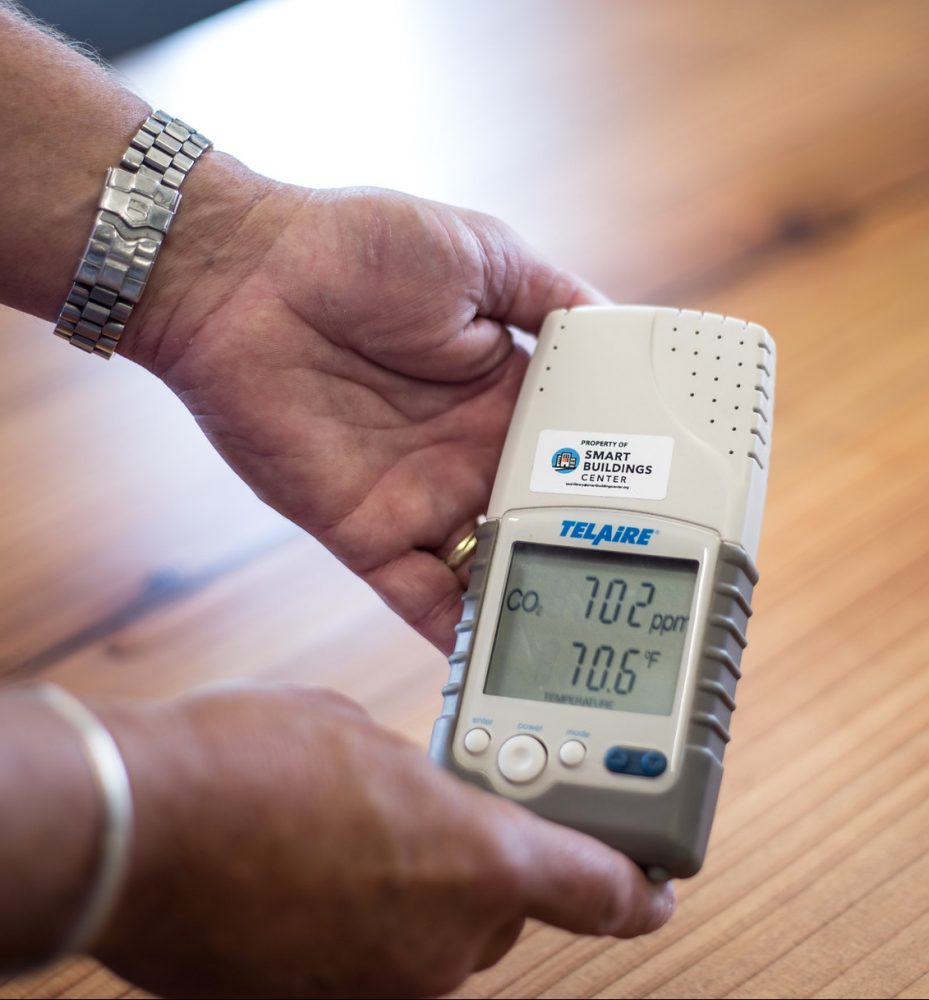
Telaire CO2/Temperature Monitor (Photo: Resource Media)

Since the temperature levels needed to affect this virus fall outside of practical ranges for building operation, there is no need to alter set points for heating or cooling. But ventilation schedules and volumes should be addressed. Running ventilation systems at nominal speed at least 2 hours ahead of building occupation time, and then lowering the speed 2 hours after normal occupancy is recommended. Keep the ventilation systems running during unoccupied hours such as nights/weekends, but at a lower speed. This applies to vacated buildings as well. During the shoulder seasons in many regions, the increased energy use resulting from this practice can hopefully be minimized due to minimal need for heating and/or cooling. Operable windows should be used to supplement mechanical systems where possible. In buildings without mechanical ventilation, use of operable windows is critical. Tool Lending Library equipment such as airflow meters, balometers (airflow capture hoods), and motor loggers can be useful to assess adequacy of airflow and make sure equipment is operating as intended during unoccupied hours.
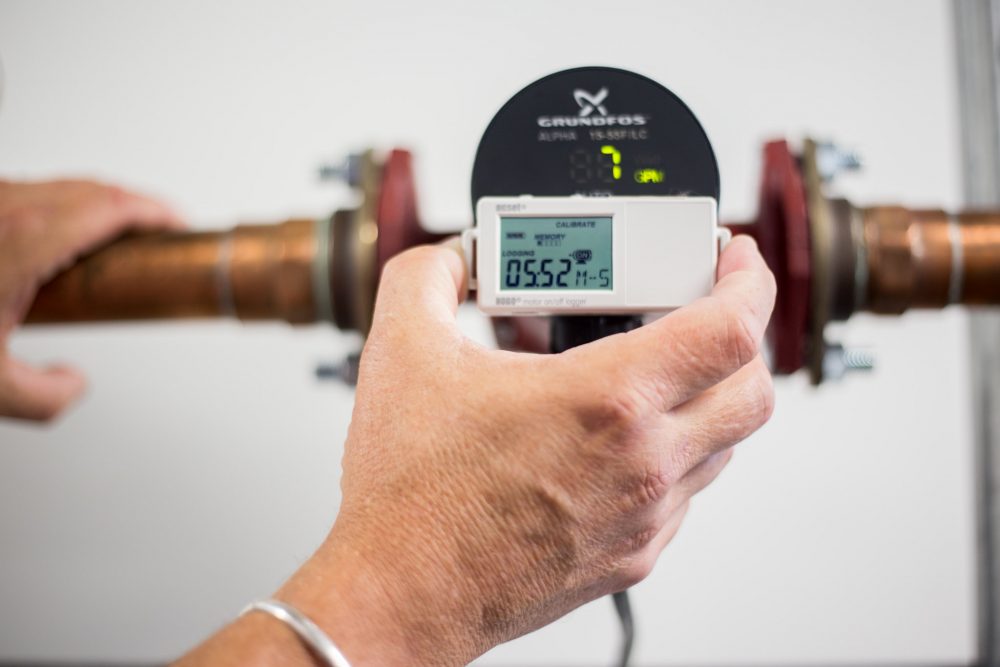
Hobo Motor On/Off data logger (Photo: Resource Media)

The exception to using operable windows for ventilation is in restrooms, where an open window can reverse the flow of ventilation and contaminate other rooms, especially in cases of passive stack exhaust. Toilet ventilation should operate 24/7. Restroom windows should remain closed, except when there is no other adequate exhaust available, in which case windows in other spaces should also be kept open to achieve cross flows through the building. Occupants should be instructed to flush toilets with the lids closed (where possible), as droplets containing virus can be dispersed to the air by plumes created when toilets are flushed. Also, maintain proper operation of water seals by avoiding dried-out floor drains and other sanitary devices; add water regularly (about every 3 weeks depending on climate). Tools such as airflow meters or a simple smoke pencil, available from the Tool Lending Library, can be useful in determining that exhaust systems are operating safely as intended.
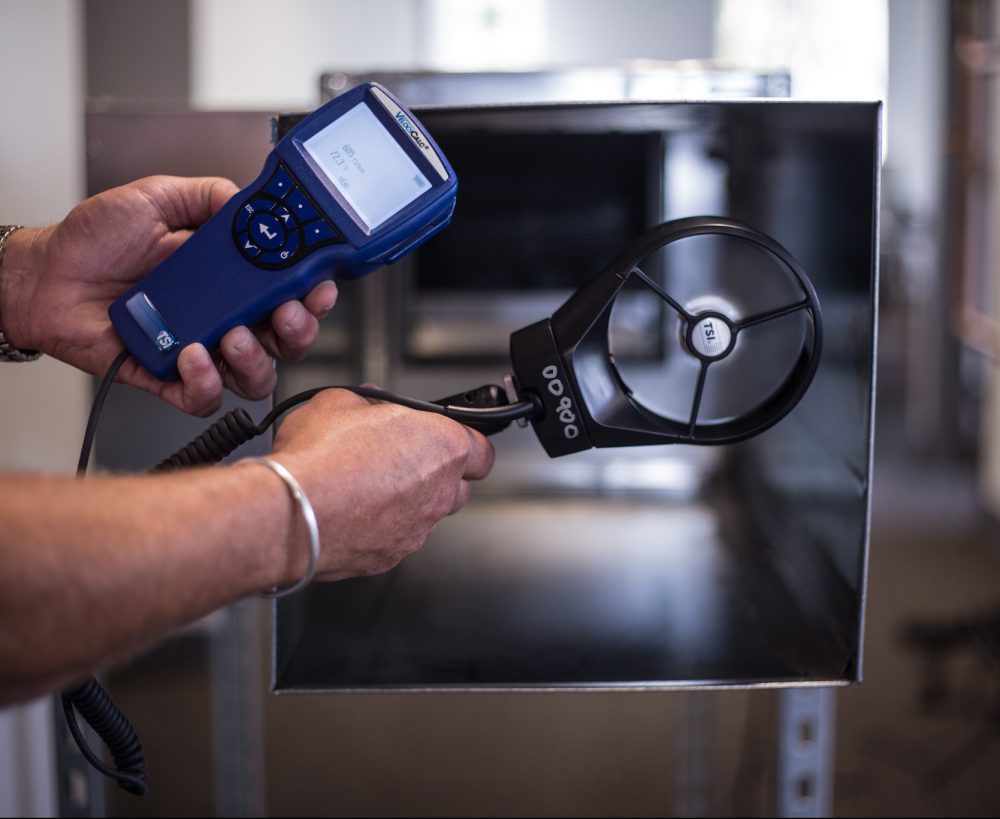
TSI Air Velocity Meter (Photo: Resource Media)

Properly installed and maintained heat recovery equipment can achieve near-zero transfer of contaminated particles; however, many heat exchangers have not been properly installed (i.e. higher pressure on the exhaust side which can cause leakage from exhaust air into supply air). Leaks are also common because of inadequate maintenance. Check heat recovery equipment and be sure that leakage is minimized as much as possible. Pressure adjustments can be made using dampers or other strategies, and some systems are equipped with a heat recovery bypass function. Leakage is higher at lower airflow rates; thus higher ventilation rates are helpful. Tools available from the Tool Lending Library, such as manometers or other pressure gauges, can be useful for assessing and correcting pressure issues. In some cases, ultrasonic leak detectors may also be helpful. PPE should always be worn when making these types of assessments.

There is a misconception that duct cleaning is required to minimize spread of the virus in buildings; however, this is likely an unnecessary practice since virus particles do not attach easily to duct surfaces. It is much more important to increase fresh air supply and avoid recirculation of air.

In the case of small spaces served by standalone fan coil or induction units that work with room level circulation, if possible, it is recommended these units be turned off to avoid airborne suspension of virus particles. If they cannot be turned off (i.e. there is a cooling need) then it is recommended to operate their fans continuously, since the virus can settle in the filters (which are typically coarse and not effective at trapping fine virus particles) and then resuspension is increased when the fan is turned back on. If the fan is running continuously, virus particles will theoretically be removed with exhaust ventilation. Room air cleaners with at least HEPA filter efficiency or special UV equipment may also be effective at removing virus particles in smaller spaces.

SBC’s Tool Lending Library has always been a valuable resource for our community, and we’ll continue to serve you to the best of our ability. In accordance with the stay-at-home order in Washington state, and to minimize risk to SBC staff as well as tool borrowers, the Tool Lending Library is currently closed for in-person transactions as well as for non-essential requests. However, we will fulfill (via shipping) requests related to critical operations and/or health and safety in facilities serving functions deemed essential, on a case-by-case basis. When making your tool reservation, please include a note about how your project specifically meets these criteria. Please be patient and allow extra time to receive loans. Precautions will be taken to make sure equipment is sanitized before and after being loaned. Contact us at [email protected] to discuss how we may serve your needs for critical operations during this time and as you prepare for re-occupying buildings in the near-future.


Filed Under: Resources, SBC News, Tool Library

GiveBIG to the Smart Buildings Center Education Program (SBCEP)!

April 16, 2020 By SBC staff


You can GiveBIG to the Smart Buildings Center Education Program (SBCEP) now through May 6th and together we can continue to work to accelerate the adoption and commercialization of smart building technologies and practices through education and demonstration.

SBCEP is a 501c3 nonprofit organization that believes the smarter use of technology and practices in the built environment, particularly as they relate to building operations and management, will enable a cleaner, healthier and more productive future. We seek to establish thought leadership in the Pacific Northwest for smart technology within the commercial and residential building sectors, and pursue our objective through the following pillars of activity: delivering training programs to educate the building workforce of the future; enabling industry leading demonstration projects; and connecting the industry through hosting and participating in smart building events.

We welcome your support to help us sustain our educational programs. You can make your one-time donation now through Wednesday, May 6. Click here to make your contribution to SBC EP through GiveBIG! Any and all levels of support are greatly appreciated and go a long way. Thank you!

Filed Under: SBC News

Cities Climate Action Webinar: Focus on Buildings

April 16, 2020 By SBC staff

Buildings have a big impact on climate, and cities can shrink that impact. Find out how at this online event!

Saturday, May 2, 9:30 – 11:00 am PDT. Additional Q&A: 11:00 – 11:30 am PDT
Register Here

The People for Climate Action Coalition is pushing ahead with educational programs to bring our city officials and the general public in King County up to speed on the actions cities can take to reduce climate change impacts. We are hopeful that promoting awareness of the actions cities can take to reduce climate change will also resonate as an opportunity to boost the economy and create jobs.

Did you know that in our nation, buildings:

  • are responsible for over 40% of our energy consumption
  • use over 75% of the power on the electrical grid, and
  • account for over a third of all greenhouse gas emissions?

Join us on Saturday, May 2nd to hear Vincent Martinez and Erin McDade, national leaders in this field, describe the work their organization, Architecture 2030, has done with a few U.S. cities to address the buildings emissions challenge through public policies. They will share some commonalities among cities that they have observed.

Before their presentations, we will be joined by Bellevue City Council Member Janice Zahn, who will frame the important role of our local cities. Then we will hear some specific details on how the energy use and greenhouse gas emissions of buildings can be significantly reduced. We will also hear a report from the City of Bellingham’s Climate Action Task Force on policy actions their city is taking to reduce the impacts of buildings. Finally, from 11:00-11:30 am, we’ll wrap up with Q & A.

Register Now!

Filed Under: Featured Event, Resources, SBC News

Important Tool Lending Library Announcement

April 7, 2020 By SBC staff

In adhering to the COVID-19 stay-at-home order issued by Gov. Inslee in effect through May 4, 2020, the Smart Buildings Center’s Tool Lending Library is operating on a limited, remote basis only. We recognize that many facilities are still open for essential businesses (https://coronavirus.wa.gov/whats-open-and-closed/essential-business), and identified specifically as essential in the order are ā€œworkers providing, maintaining and repairing heating, cooling, and refrigeration servicesā€ for these facilities. As such, we will only fulfill tool requests directly related to critical operations functions of these facilities, or for health/safety needs. When making your reservation, please be specific about how your project meets these criteria. Other requests will remain in the queue until the library resumes full operations.

During this time, we are not fulfilling orders in person but will be shipping all requests, taking precautions to sanitize tool surfaces. We appreciate your efforts to do the same before shipping tools back to us. Our on-site library staff resources are currently limited. Please help us by being patient with the extra time it may take to receive loans, and consider postponing your nonessential tool requests for a date after the library resumes in-person operations.

If you have questions, please email [email protected].

Thank you to building managers, engineers, and operators working to maintain critical building infrastructure that provides space for many essential businesses and services. Your work to ensure continuity of building functions while maintaining safe and healthy conditions for occupants is greatly appreciated!

Filed Under: SBC News, Tool Library

Accelerating Existing Building Tune-Ups in Seattle Webinar Recording Available

April 7, 2020 By SBC staff

In this webinar, held on 3/26/20, Nicole Ballinger, Seattle’s Building Tune-up Accelerator Program Manager described the tune-up program, benefits, and best practices discovered through the pilot process. Nora Wang of Pacific Northwest National Lab described the use of the DOE Asset Score tool in building assessments.

  • Watch:Ā Webinar Recording on YouTube
  • Slides:Ā Download PDF
  • Webinar Questions & Answers:Ā Download PDF

Seattle Building Tune-up Accelerator Program highlights and case studies can be found on the City of Seattle’s websiteĀ and the final report will be posted later this spring/early summer.

Filed Under: Resources, SBC News

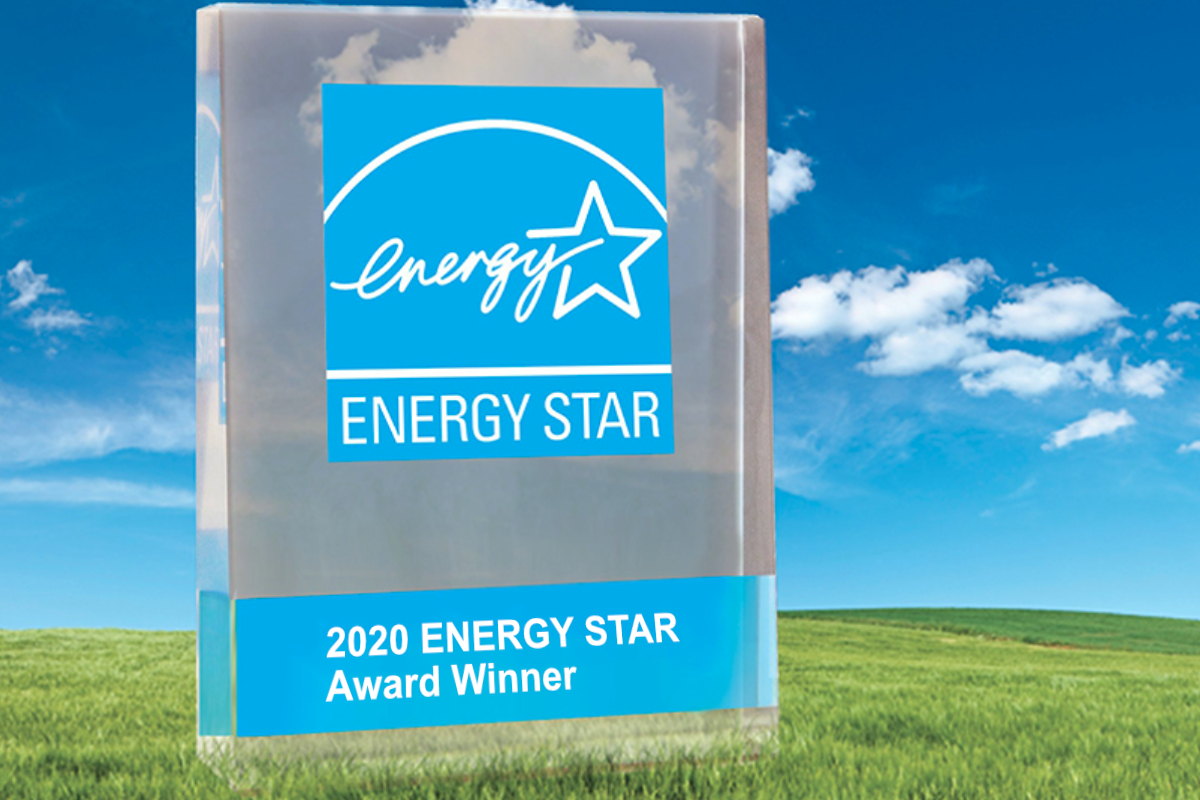
NEEC’s Smart Buildings Center Earns 2020 ENERGY STARĀ® Award for Excellence

April 6, 2020 By SBC staff


The Northwest Energy Efficiency Council’s (NEEC) Smart Buildings Center (SBC) is proud to announce that it received the 2020 ENERGY STARĀ® Award for Excellence for its outstanding efforts to promote ENERGY STAR’s mission, products, and the importance of energy efficiency for the economy through its various programs. NEEC/SBC’s accomplishments will be recognized by the U.S. Environmental Protection Agency and the U.S. Department of Energy at a ceremony in Washington, D.C. on April 22, 2021.

NEEC, an ENERGY STAR partner since 2002, will be honored for SBC’s work in promoting ENERGY STAR Ā programs and products that meet ENERGY STAR specifications for energy efficiency through its Building Operator Certification (BOC) program, support of the City of Seattle’s Benchmarking Program with the ENERGY STARĀ® Portfolio ManagerĀ® Help Desk, and supporting local jurisdictions with data analytics and visualization tools using building energy datasets from ENERGY STAR Portfolio Manager.

Catering to the interests of local governments, SBC offers innovative energy data analytics and visualization techniques to analyze building performance, address challenges in performance trends, and advance energy efficiency. Over the past several years, SBC has worked with local jurisdictions in supporting quality checks of ENERGY STAR Portfolio Manager accounts and utilizing their building energy performance data to provide actionable information for energy savings. SBC specializes in offering customized dashboards, infographics and other visualization techniques using ENERGY STAR Portfolio Manager’s energy data. These tools are helpful in identifying opportunities for improvement and help evaluate and support smart buildings projects including building tune-up and retrofits.

Since 2011, NEEC has administered the Help Desk for the City of Seattle’s Energy Benchmarking and Reporting Program. SBC coordinates and provides hands-on energy benchmarking workshops, drop-in sessions and in-depth email and phone support to help customers navigate ENERGY STAR Portfolio Manager to benchmark buildings to meet the City of Seattle’s benchmarking requirements. SBC also collaborated with the City of Seattle on the Building Tune-Up Accelerator Program which was developed to address the specific needs of the small to medium commercial building market and utilized ENERGY STAR Portfolio Manager to conduct data analysis and monitoring and verification of building performance.

With funding from the Washington State Department of Commerce, SBC created a Benchmark Support Services program that assists efforts to benchmark public and private commercial buildings in the state, better manage the collection and analysis of building performance data, and support state and local jurisdictions who undertake benchmark and disclosure efforts. SBC currently offers a suite of resources that help owners and managers to benchmark a building with ENERGY STAR Portfolio Manager.

NEEC also administers the Building Operator Certification (BOCĀ®) program which trains and certifies commercial and institutional building facility staff in best practices for energy efficiency. This includes benchmarking building performance through ENERGY STAR’s Portfolio Manager software tool and in specifying the purchase of ENERGY STAR products and equipment. Over 22,000 building operators have earned a BOC credential across the United States. The national BOC program is administered through a network of licensed providers who train building technicians in BOC best practices in 38 states and D.C. with diverse climate zones in the East, Midwest, Southeast, and Pacific Coast. These providers contributed to the achievements recognized with this award. They include City University of New York, Gwinnett Technical College, Lakes Regions Community College, Midwest Energy Efficiency Alliance, Northwest Water & Energy Education Institute, Pennsylvania College of Technology, South Carolina Technical College System, South-central Partnership for Energy Efficiency as a Resource, Santa Fe Community College, Southeast Energy Efficiency Alliance, University of Hawaii, and the Arkansas Department of Energy and Environment.

ā€œIn an industry undergoing rapid transformation, ENERGY STAR remains a trusted name in promoting energy efficient equipment and practices, and NEEC’s Smart Buildings Center is honored to be a long-term partner,ā€ said Kerry Meade, Executive Director of NEEC/SBC. ā€œOur work supporting the City of Seattle in its successful energy benchmarking program and SBC’s ongoing training of building operators rely on ENERGY STAR to underpin success.ā€

ā€œI salute the 2020 ENERGY STAR award winners,ā€ said Anne Idsal, EPA Principal Deputy Assistant Administrator for Air and Radiation. ā€œThese leaders demonstrate how energy efficiency drives economic competitiveness in tandem with environmental protection.ā€

ENERGY STAR Excellence awards are given to companies and organizations in recognition of important contributions to energy efficiency. For a complete list of 2020 winners and more information about ENERGY STAR’s awards program, visit energystar.gov/awardwinners.

About Northwest Energy Efficiency Council’s Smart Buildings Center

The Northwest Energy Efficiency Council (NEEC) is a non-profit business association of the energy efficiency industry headquartered at the Smart Buildings Center (SBC) in Seattle, WA. NEEC’s mission is to promote policies and programs that enhance market opportunities for energy efficiency. The SBC is designed to spur collaboration and innovation throughout the energy efficiency sector — showcasing the opportunities for facility operational excellence when smart meets efficient. The SBC provides a range of services from Energy Benchmarking technical support to training and credentialing through the Building Operator Certification (BOCĀ®) program.

About ENERGY STAR

ENERGY STAR® is the government-backed symbol for energy efficiency, providing simple, credible, and unbiased information that consumers and businesses rely on to make well-informed decisions. Thousands of industrial, commercial, utility, state, and local organizations—including more than 40 percent of the Fortune 500 companies—rely on their partnership with EPA to deliver cost-saving energy efficiency solutions. Since 1992, ENERGY STAR and its thousands of partners helped American families and businesses save more than 4 trillion kilowatt-hours of electricity and achieve over 3.5 billion metric tons of greenhouse gas reductions. In 2018 alone, ENERGY STAR and its partners helped Americans avoid nearly $35 billion in energy costs. More background information about ENERGY STAR can be found at: energystar.gov/about and energystar.gov/numbers.

Filed Under: SBC News

Posts pagination

Previous Page 1 … Page 24 Page 25 Page 26 Page 27 Page 28 … Page 45 Next

Help fund our Education Program

DONATE TODAY

Sign up for updates

Join the Smart Buildings Center mailing list for information about events and smart buildings news.

Your email has been added to the Smart Buildings Center mailing list for information about events and smart building news.

News & Articles

SBX 2026 Keynote Announcement & Hotel Room Block

October 13, 2026

10/21 and 10/23 Qualified Energy Manager Training

October 13, 2026

Q3 Quarterly Recap

October 12, 2026

10/30 Tool Time Lunch and Learn: Identifying Opportunities for Operational Improvement

October 7, 2026

Western Washington Job Opportunities: Building Operations Experience for Project Leadership

October 1, 2026

Contact Us

Smart Buildings Center
Pacific Tower
1200 12th Ave. S., Suite 110
Seattle, WA 98144

206-538-0832

[email protected]

Smart Buildings Center is a project collaboration with Building Potential


Smart Buildings Center · Pacific Tower, 1200 12th Ave. S., Suite 110, Seattle, WA 98144 · 206-538-0832

© 2026 · Northwest Energy Efficiency Council