Join us for the Smart Buildings Exchange 2026!

Smart Buildings Center

Energy Efficiency Innovation Center, Tool Library & Data Visualization

  • About
    • Staff
    • Board of Directors
    • Contact
    • Donate
  • Partners
    • Partner Benefits
  • Tool Library
    • Browse Inventory
    • Case Studies
    • Lending Library Policy
    • Customer Agreement
    • Tool Resources
  • Use Our Space
    • Training/Event Space
    • Large Conference Room
  • Training
    • Building Operator Certification
    • Remote Learning Calendar
    • Remote Learning Library
    • Qualified Energy Manager Training
  • Resources
    • Clean Buildings Performance Standard Helpdesk
    • Building Efficiency and Clean Operations Network (BEACON) Fellow Project
    • K-12 Ventilation & Indoor Air Quality Resources
  • Compliance
    • WA State Clean Buildings Performance Standard (CBPS)
    • City of Seattle Benchmarking Helpdesk
  • Events
    • SBX Conference
  • Blog

Smart Buildings Exchange Preliminary Agenda Now Available!

April 19, 2022 By SBC staff

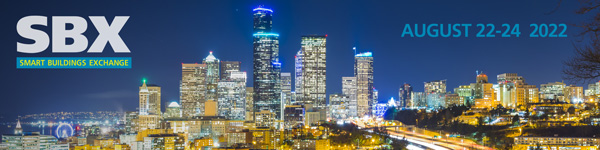
The preliminary agenda for Smart Buildings Exchange 2022 is now available at sbxconference.org/agenda! The free, three-day virtual event to be held August 22-24 will explore the market opportunity for smart buildings through interactive conference sessions featuring a mix of panel discussions and case study presentations on the future of energy services and the built environment, grid-interactive efficient buildings, the role of smart buildings in carbon emission reductions, and more.

View the agenda and register for free today!

In-Person Networking Events
On August 24th, regional in-person networking events featuring a livestreamed conference session on how smart technologies can support building performance reporting will be held. If you are interested in hosting an in-person SBX networking event in your region, please contact Britton Rife to coordinate. Recommended guidelines for hosting the in-person networking events can be found here. Stay tuned for more details as plans are developed!

Sponsorship Opportunities
For more information about ways your organization or business can participate in the conference, please download our Sponsorship Prospectus or contact Stan Price for customized sponsorship/partnership opportunities.

Register for free today!
 

Filed Under: Featured Event, SBX, Webinars

Tool Lending Library Case Study – Hospital Electricity Use

April 13, 2022 By SBC staff

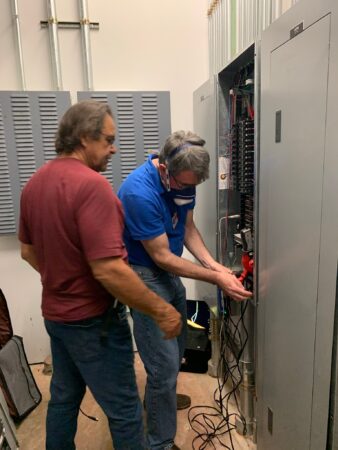
Photo credits: Walt Vernon, Mazzetti/2020

The Smart Buildings Center Tool Lending Library supported a yearlong project led by Mazzetti, a health care engineering, planning, and design firm, to study electricity use at eight hospitals across the country.

During the pandemic, Mazzetti, on behalf of the Fire Protection Research Foundation, studied electrical demand in hospitals. Although the study initially planned to look at electrical loads in multiple occupancies, after the pandemic started, Mazzetti realized there was a unique opportunity—for the first time in a hundred years, since the 1918 flu pandemic—to look at electrical loads in hospitals during a pandemic.

Mazzetti borrowed Fluke 1730 3 Phase Logging Power Meters from the Tool Lending Library to measure electrical loads at hospital panels. These meters were installed at hospital panels and helped in conducting a robust study.

Read the full case study

Filed Under: Resources, Tool Library

Better Buildings Top 10 Solutions for April

April 13, 2022 By SBC staff

The top 10 most-viewed resources on the Better Buildings Solution Center from the past month feature strategies for low carbon technologies, clean energy access in low-income communities, project financing, and more. This list also highlights solutions from partners New York City Housing Authority, IHG Hotels & Resorts, and Ford Motor Company. Check out this month’s line up!

1. Low Carbon Technology Strategies Toolkit

To help building owners and operators reduce carbon emissions, this toolkit offers guidance on how to achieve deep carbon reductions in existing buildings with a primary focus on retrofits and operational strategies. Low carbon technology strategies are currently available for 10 building types, with a supplement for commercial kitchen equipment. Recommendations are grouped by technology, with actions categorized as either simple, intermediate, or advanced. Read more.

2. Clean Energy for Low-Income Communities (CELICA) Toolkit

Low-income households spend about 8% of their income on energy costs, three times more than average. Better Buildings Accelerator partners committed $335 million to help 155,000 low-income households access energy efficiency and renewable energy benefits, collecting resources and lessons learned into the CELICA Toolkit. The toolkit includes a guide to program development and replicable program models for single-family and multifamily housing, as well as community solar. Read more.

3. Smart Energy Analytics Campaign Toolkit

With analytic software applied to everyday building operations, owners are using data to their advantage and realizing cost savings through improved energy management. This toolkit collects the best resources from DOE’s Smart Energy Analytics Campaign to help facility owners and managers take advantage of savings opportunities and performance improvements from energy management information systems (EMIS) and ongoing monitoring practices. Read more.

4. Green Revolving Funds Toolkit

This collection of solutions provides guidance on establishing a green revolving fund to overcome a lack of dedicated capital. A green revolving fund is an internal capital pool dedicated to funding energy efficiency, renewable energy, and sustainability projects that generate cost savings. A portion of those savings is then used to replenish the fund, establishing an ongoing funding vehicle to help drive energy efficiency and sustainability investment over time. Read more.

5. Showcase Project: New York City Housing Authority: 344 East 28th Street

To address energy challenges faced at its 344 East 28th Street multifamily apartment complex, Better Buildings Challenge partner New York City Housing Authority (NYCHA) conducted an extensive lighting, heating, and hot-water modernization project. Energy-efficient upgrades made to these building systems, as well as NYCHA’s first-ever deployment of renewable technologies, resulted in nearly 40% annual energy savings and nearly $114,000 in cost savings. Read more.

6. Energy Savings Performance Contracting (ESPC) Toolkit

This collection of resources enables state and local communities to benefit from the experience of partners who have successfully established and implemented performance contracting. It includes best practices and innovative approaches that states, cities, and K-12 schools have used. Users can easily find the information they need at each stage of their ESPC decision-making process. Read more.

7. High-Efficiency RTU Replacement Toolkit

This toolkit helps HVAC contractors and service companies work with their customers through a step-by-step process of evaluating and managing their inventory of rooftop units (RTUs) and how to evaluate the business case for high-efficiency replacements. From an incentives database to a comparison calculator, the toolkit provides everything needed to make an informed decision regarding RTU replacements. Read more.

8. IHG Hotels & Resorts Green Engage™ Program

IHG Hotels and Resorts, a Better Buildings Alliance partner, created the IHG Green Engage™ system as a comprehensive online sustainability platform. It allows hotels to track, measure, and report on their carbon footprint and utility consumption. With over 200 Green Solutions, including detailed action plans, guidance, and case studies, Green Engage can help hotels avoid up to $67 million in utility costs while significantly reducing their carbon footprint. Read more.

9. Engaging Tenants in Energy Efficiency Toolkit

Building occupants can control up to 80% of energy use in a commercial building. Tenant engagement in energy efficiency initiatives is crucial to unlocking the full energy savings potential. This toolkit outlines successful strategies and resources for bridging the tenant-landlord divide through green leasing guidance, tenant improvement and build-out best practices, and examples of successful communication with tenants regarding energy efficiency opportunities. Read more.

10. Ford Motor Company: Dearborn Campus Uses a Digital Twin Tool for Energy Plant Management

A digital twin is the virtual representation of an object or system across its life cycle that helps operators quickly identify problems. Better Plants partner Ford Motor Company is using a digital twin of the new central energy plant (CEP) at its Dearborn Research and Engineering Campus, which is projected to reduce campus energy and water use by 50%. The digital model helps the Ford team manage potential risks by monitoring functions across the CEP and providing real-time data for increased visibility and more efficient operations. Read more.

Filed Under: Resources

Upcoming Lighting Design Lab Classes

April 13, 2022 By SBC staff

The Networked Lighting Controls Value Proposition
Thu, Apr 14 | 10am-noon | FREE

The real opportunity brought forth by NLC systems revolve around reducing maintenance efforts, increasing productivity, and serving as the infrastructure to concepts such as Space Utilization, Asset Tracking, Horticultural Lighting and Automation, LiFi, Tunable White or Circadian Lighting, integration to the Smart Building Ecosystem, and a plethora of IoT applications. This value proposition is forward looking and is not adopted as a mainstream plan of action – how do we get there? In this webinar we will discuss some of these non-energy benefits, how to get a foot in the door, and how to navigate the conversation with different types of stakeholders with diverse agendas.

Register here

Networked Lighting Controls Fundamentals – Day 1
Thu, Apr 21 | 10am-noon | FREE

DAY 1 OF 2. Part one of this comprehensive online class will introduce you to modern lighting control strategies and equipment. Part two will offer guidance on successful implementation and programming approaches for these systems. System concepts, design, installation, sequence of operations, and startup will all be discussed over the course of the class.

Register here

Networked Lighting Controls Fundamentals – Day 2
Thu, Apr 28 | 10am-noon | FREE

DAY 2 OF 2. Part one of this comprehensive online class will introduce you to modern lighting control strategies and equipment. Part two will offer guidance on successful implementation and programming approaches for these systems. System concepts, design, installation, sequence of operations, and startup will all be discussed over the course of the class.

Register here


Energy & Alterations: Meeting the Alterations Requirements of the Energy Code
Thu, May 05 | 10am-noon | FREE

This 2-hour webinar will summarize the “alterations” requirements of the Seattle and Washington state energy codes and offer suggestions for potential design solutions. It will provide an overview of the alterations provisions of Chapter 5, with a special focus on replacing existing gas or electric resistance space heating and water heating systems with heat pump systems. Alterations to envelope, lighting, electrical, metering, and HVAC systems will also be covered, as will Seattle’s “substantial alterations” rules in addition to “additions.” The webinar will conclude with a substantial Q&A period for discussion of specific applications.

Register here

Networked Lighting Controls for Healthcare
Thu, May 12 | 10am-noon | FREE

This class will build on the foundation of our one- and two-day Networked Lighting Controls classes by examining controls that may be effectively applied to areas of specific interest to the healthcare environment including clinics, patient rooms, procedure areas, and related spaces. We will consider how networked lighting controls may help to improve patient and staff perception, productivity, and patient outcomes. We will specifically discuss how lighting controls implementation may relate to current research regarding light and health, circadian entrainment, and shift workers.

Register here

Filed Under: Education & Training, Webinars

Online Open House about Building Performance Standards Policy Development – April 5th  

March 16, 2022 By SBC staff

The Office of Sustainability and Environment is conducting stakeholder and community engagement on creating draft legislation for new City of Seattle regulations for commercial and multifamily buildings 20,000 square feet and larger that would reduce climate-polluting emissions and transition towards cleaner, healthier places to live and work. Called ‘Building Performance Standards,’ these carbon emissions targets would become gradually stronger over time towards a goal of cleaner, healthier, ‘net-zero’ carbon emissions buildings by 2050, while improving the quality of life for residents and creating local, well-paying jobs. OSE will present about the potential regulations and the links between buildings, climate pollution, equity, and health. The meeting will include listening sessions to hear participant’s ideas and concerns. OSE is planning another online open house for late spring in the evening (date TBD). Presentations and meeting summaries will be posted online after the events.

  • Date: April 5, 2022, from 12:00pm to 1:30pm
  • Location: Online via Zoom
  • More information and pre-register here: seattle.gov/building-performance-standards
  • Closed captioning will be provided. Live translation is available upon request – email [email protected] to request. 

Filed Under: Webinars

Learn about Building Controls On-Demand

March 16, 2022 By SBC staff


Building controls can drive big energy savings – if you can master them. Slipstream is here to help. We partnered with energy experts to guide you at every step of your controls learning journey – from the fundamentals to advanced building controls. From design to implementation. Including how your daily facility operation and energy management strategy will benefit when building controls work for you.

Visit our free on-demand library for:

  • 17 short sessions for energy managers
  • 20 in-depth sessions for building operators and facility engineers
  • Up to 18.5 hours of continuing education credits

Learn more

Slipstream was awarded a grant by the Department of Defense (DoD) Environmental Security Technology Certification Program (ESTCP) to develop this comprehensive training library on building controls for you. These courses cover everything from the fundamentals of building HVAC systems and controls to advanced control strategies for intelligent building operations and more.

Courses are grouped by topic. You can follow the recommended learning flow from simple to more complicated topics. Sign up for free today to access these courses and watch them on-demand.

Learn more about these training courses or sign up today!

Filed Under: Education & Training, Resources, Webinars

Posts pagination

Previous Page 1 … Page 15 Page 16 Page 17 Page 18 Page 19 … Page 48 Next

Help fund our Education Program

DONATE TODAY

Sign up for updates

Join the Smart Buildings Center mailing list for information about events and smart buildings news.

Your email has been added to the Smart Buildings Center mailing list for information about events and smart building news.

News & Articles

Happening This Week at the Smart Buildings Center: Behind the Benchmarking Help Desk: Meet Jessica Cherry and Shino Severson

August 14, 2026

Smart Buildings Center July Wrap-up

August 12, 2026

SBC Announces 2026 BOC Operator of the Year!

August 11, 2026

SBX 2026 Keynote Announcement & Early-Bird Deadline (8/15)

August 7, 2026

Happening This Week at Smart Buildings Center: BOC earns Energy Skilled Recognition from DOE

July 31, 2026

Contact Us

Smart Buildings Center
Pacific Tower
1200 12th Ave. S., Suite 110
Seattle, WA 98144

206-538-0832

[email protected]

Smart Buildings Center is a project collaboration with Building Potential


Smart Buildings Center · Pacific Tower, 1200 12th Ave. S., Suite 110, Seattle, WA 98144 · 206-538-0832

© 2026 · Northwest Energy Efficiency Council