Join us for the Smart Buildings Exchange 2026!

Smart Buildings Center

Energy Efficiency Innovation Center, Tool Library & Data Visualization

  • About
    • Staff
    • Board of Directors
    • Contact
    • Donate
  • Partners
    • Partner Benefits
  • Tool Library
    • Browse Inventory
    • Case Studies
    • Lending Library Policy
    • Customer Agreement
    • Tool Resources
  • Use Our Space
    • Training/Event Space
    • Large Conference Room
  • Training
    • Building Operator Certification
    • Remote Learning Calendar
    • Remote Learning Library
    • Qualified Energy Manager Training
  • Resources
    • Clean Buildings Performance Standard Helpdesk
    • Building Efficiency and Clean Operations Network (BEACON) Fellow Project
    • K-12 Ventilation & Indoor Air Quality Resources
  • Compliance
    • WA State Clean Buildings Performance Standard (CBPS)
    • City of Seattle Benchmarking Helpdesk
  • Events
    • SBX Conference
  • Blog

King County Launches Sewer Heat Recovery Pilot Program

November 5, 2020 By SBC staff

The following is a press release from King County from November 5, 2020.

Commercial property owners and developers have the opportunity to extract and re-purpose heat energy from sewer pipes through the King County Wastewater Treatment Division’s new Sewer Heat Recovery pilot program. King County invites commercial property owners and developers to apply for consideration as potential users.

The hot water that goes down drains every day from homes and businesses and maintains a constant temperature as it travels through sewer pipes to treatment plants is an unused renewable resource. Allowing buildings to tap into King County’s sewer pipes to recover this energy is another step the county is taking to shape resilient and sustainable communities.

The King County Wastewater Treatment Division (WTD) is the first utility in Washington and one of the first in the nation to offer commercial property owners and developers an opportunity to recover energy from its sewer pipes for heating or cooling buildings. As part of its Sewer Heat Recovery program, WTD is seeking two building pilot projects. New construction and retrofit projects are eligible.

Applications for program participation must be received by Dec. 18, 2020. Program information and application can be found at kingcounty.gov/sewerheatrecovery.

The King County Council recently unanimously approved legislation that authorized WTD to approve sewer heat recovery projects. While fairly common in Europe and parts of Canada, standardized use agreements like this are pioneering in the United States.

“Our new Sewer Heat Recovery program is a great opportunity for us to partner with King County commercial property owners,” said Mark Isaacson, WTD Director. “This technology will lower a connected building’s carbon emissions, and help owners decrease their environmental footprint. Sewer heat recovery can also help owners and developers meet more stringent energy codes and give them a chance to leverage occupancy strategies that could attract tenants, buyers, and potential investors.”

RELEVANT LINKS
Sewer Heat Recovery program website
Sewer Heat Recovery Frequently Asked Questions

FOR MORE INFORMATION, CONTACT:
Marie Fiore, 206-247-9260; [email protected]

About the King County Wastewater Treatment Division
King County’s Wastewater Treatment Division protects public health and enhances the environment by collecting and treating wastewater while recycling valuable resources for the Puget Sound region. The division provides wastewater treatment services to 17 cities, 17 local sewer districts and more than 1.8 million residents across a 420-square-mile area in King, Snohomish and Pierce counties.

Filed Under: Resources

Help Your Customers with Buildings Under 100,000 SF Comply with Seattle Building Tune-Ups

November 3, 2020 By SBC staff

Seattle Building Tune-Ups aim to optimize energy and water performance by identifying low- or no-cost actions related to building operations and maintenance, that generate 10-15% in energy savings, on average. Tune-Ups are required every five years for buildings in the City of Seattle with 50,000 square feet or more of non-residential space (excluding parking). The largest buildings have collectively achieved 97% compliance with the new regulation resulting in nearly 330 completed Tune-Ups.

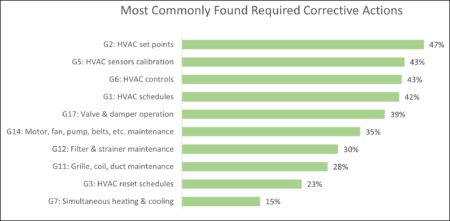
Compliance takes time, often between 6 and 12 months, and many owners use the grace period to complete implementation and verification of required corrective actions. Initiate conversations with your customers now to ensure there is adequate time to complete the on-site building assessment and follow through on required corrective actions. HVAC operations dominate the most commonly found deficiencies. Many including HVAC set point adjustments and sensor calibration fixes were identified and made in nearly half of all Tune-Ups submitted to date.

Owners of smaller buildings must meet the new Tune-Up mandate, April 1, 2021 for Cohort 3 buildings (70,000 to 99,999 square feet) and October 1, 2021 for Cohort 4 buildings (50,000 to 69,999 square feet). In addition to saving energy and water, conducting a Tune-Up can also help with preparing your building for operation during and/or after the COVID-19 pandemic.

All work associated with a Building Tune-Up must be done by a qualified Tune-Up Specialist, the experienced professionals responsible for conducting the building assessment, identifying required Tune-Up actions, performing those actions, verifying the work is done correctly, and submitting a report to the City.

As a certified Level II Building Operator (BOC), you’re well on your way to qualifying as a Tune-Up Specialist. Tune-Up Specialists must have least seven years of experience, including educational and/or professional experience, with commercial building operations and/or building energy management AND have one of the following certifications:

  • Professional Engineer (PE) in mechanical or architectural engineering
  • Building Operator Certification (BOC) Level II
  • Certified Energy Manager (CEM)
  • Certified Commissioning Professional (CCP)
  • Commissioning Authority (CxA)
  • Existing Building Commissioning Professional (EBCP)
  • Sustainable Building Science Technology Bachelor of Applied Science (BAS)

The Northwest Energy Efficiency Council (NEEC) has a directory of qualified Tune-Ups Specialists. If you meet the qualifications of a Tune-Up Specialist and would like to be a part of this list, please submit a Tune-Up Specialist registration via the Seattle Services Portal.

If you’re a Tune-Up Specialist looking for literature or information to share with your clients about the program and its requirements, feel free to use the Tune-Ups Fact Sheet and Owner’s Guide.

For inquiries or questions, please email [email protected] or call 206-727-8863 (TUNE). To learn more about Seattle Building Tune-Ups, visit www.seattle.gov/buildingtuneups.


Filed Under: Resources

Case Study – Sunfresh Foods Freezer Upgrade

October 22, 2020 By SBC staff

Sunfresh Foods Inc. is a small, locally owned company based in Seattle that has coined the term “Freezerves” to describe their signature freezer jam product.

The Sunfresh processing facility is an approx. 10,000 sq. ft. pre-fab concrete building built in the 1970s. Sunfresh wanted to reduce their high electricity bills and identified their extremely inefficient refrigeration systems as the biggest opportunity for improvement. Before beginning the project, they reached out to the Energy Conservation Program at Seattle City Light (the local utility) about possible incentives. City Light was able to provide a substantial rebate, making it cost effective for Sunfresh to upgrade to a new system. The new system achieves high energy efficiency while helping Sunfresh also attain the attendant social benefits of saving energy.

How did the Smart Buildings Center help?
City Light asked Bob Brennand of Energy Smart Industrial (ESI) to help with measurement and verification (M&V) of the actual energy savings to determine the amount of the incentive.

The ESI program, sponsored by Bonneville Power Authority (BPA), helps utility customers and their industrial end-users achieve cost-effective energy savings.

Bob borrowed the Dent ElitePro XC logging power meters from Smart Buildings Center’s Tool Lending Library to measure consumption data after the upgrade, and the results were very impressive.

To continue reading, please download the full case study.

  • Sunfresh Case Study (PDF)


Filed Under: Resources, Tool Library

Is the Workforce Ready for High Performance Buildings? Report Finds Major Skills Gaps

September 30, 2020 By SBC staff

Melanie Danuser and the Smart Buildings Center team contributed to the ACEEE report “Training the Workforce for High-Performance Buildings: Enhancing Skills for Operations and Maintenance.”

By Mariel Wolfson, Editor/Writer

We know that improving the energy efficiency of the U.S. building stock can reduce building-related carbon emissions by as much as 50%. High performance buildings, which are energy-efficient, durable, resilient, and offer excellent indoor air quality, will be critical for cutting emissions and meeting our climate goals. Yet these buildings also require highly specialized knowledge to optimize performance.

This specialized knowledge is the focus of a new ACEEE report released today. The report — based on an original survey and expert interviews with professionals who work with high performance buildings as owners, managers, and technicians — identifies the precise skills that education and training programs should prioritize to ensure that the workforce can meet current and future demands.

The vast majority of respondents — 92% — said that operations and maintenance (O&M) is the most critical skill area for the buildings workforce of the future…

Continue reading the blog post

Download the report

Filed Under: Education & Training, Resources, SBC News

DOE Announces $80 Million 2020 BENEFIT Funding Opportunity

September 30, 2020 By SBC staff

The U.S. Department of Energy (DOE) released the Buildings Energy Efficiency Frontiers & Innovation Technologies (BENEFIT) 2020 Funding Opportunity Announcement (FOA). This funding opportunity will provide up to $80 million for projects that enhance energy demand flexibility across buildings and the grid, enabling greater affordability, increased energy productivity, and improved occupant comfort.

The BENEFIT FOA has been issued by the Office of Energy Efficiency and Renewable Energy’s Building Technologies Office since 2014. This year’s FOA broadens DOE’s investments in cutting-edge, energy-saving building technologies, systems, and practices that will impact various segments of the buildings industry.

The FOA includes topic areas on advanced building construction, workforce development, and a variety of building technologies, including advanced lighting, HVAC, and thermal energy storage, among others.

How to Apply

More information, submittal requirements, and instructions for applying to this FOA (DE-FOA-0002196) can be found on the EERE Exchange. To be eligible for consideration, a concept paper must be submitted no later than November 5, 2020 by 5:00 p.m. ET.

Questions about this FOA may be submitted to [email protected] no later than three business days before the application deadline. Please note, feedback on individual concepts will not be provided through Q&A.

Submission Deadlines

  • Submission Deadline for Concept Papers: November 5, 2020 by 5:00 p.m. ET
  • Submission Deadline for Full Applications: January 20, 2021 by 5:00 p.m. ET

To read more about this FOA, visit the EERE Exchange.

Filed Under: Resources

Building Tune-Up Accelerator Program – Final Technical Report Published

September 3, 2020 By SBC staff

In 2016, as part of its Climate Action Plan, the City of Seattle passed a mandatory Building Tune-Ups requirement (SBTU) for commercial buildings over 50,000 square feet gross floor area, with a focus on optimizing energy and water performance by identifying low or no cost solutions related to building operations and maintenance.

The Tune-Up Accelerator (TUA) Program was an opportunity for building owners to meet the requirements early and receive incentives from the utilities for the corrective actions implemented to optimize building performance. 102 buildings completed the TUA program representing 6.9 million SF total and about 18% of the target market buildings with 50,000-100,000 SF. The final technical report for TUA program is published on the City of Seattle Office of Sustainability and Environment (OSE) website.

The Smart Buildings Center (SBC) was a program partner and served as a primary provider of training & curricula, Tool Lending Library (TLL) support, project tracking and help desk support for the Tune-Up Accelerator (TUA) Program.

SBC along with Pacific Northwest National Laboratory (PNNL) and OSE led the development of the curriculum, which was centered around a customization of PNNL’s Building Re-tuning training for SBTU requirements. To track deliverables required by each participant and evaluate savings resulting from corrective actions taken by buildings, a robust custom database was created by SBC.

SBC also conducted Measurement & Verification (M&V) services on 10% of the participating building population which included onsite verification and data analysis. The aim of M&V was to evaluate the energy and cost savings resulting from energy measure implemented by the buildings.

Read more about the findings of the Building Tune-Up Accelerator Program in the final technical report here!

To Learn more about our Tool Lending Library, click here!

Filed Under: Education & Training, Resources, SBC News, Tool Library

Posts pagination

Previous Page 1 … Page 19 Page 20 Page 21 Page 22 Page 23 … Page 25 Next

Help fund our Education Program

DONATE TODAY

Sign up for updates

Join the Smart Buildings Center mailing list for information about events and smart buildings news.

Your email has been added to the Smart Buildings Center mailing list for information about events and smart building news.

News & Articles

Don’t miss these SBX Keynotes & Networking Opportunities!

October 22, 2026

SBX Day 2 Highlights

October 20, 2026

10/30 Tool Time Lunch and Learn: Identifying Opportunities for Operational Improvement

October 19, 2026

SBX 2026 Keynote Announcement & Hotel Room Block

October 13, 2026

10/21 and 10/23 Qualified Energy Manager Training

October 13, 2026

Contact Us

Smart Buildings Center
Pacific Tower
1200 12th Ave. S., Suite 110
Seattle, WA 98144

206-538-0832

[email protected]

Smart Buildings Center is a project collaboration with Building Potential


Smart Buildings Center · Pacific Tower, 1200 12th Ave. S., Suite 110, Seattle, WA 98144 · 206-538-0832

© 2026 · Northwest Energy Efficiency Council