Join us for the Smart Buildings Exchange 2026!

Smart Buildings Center

Energy Efficiency Innovation Center, Tool Library & Data Visualization

  • About
    • Staff
    • Board of Directors
    • Contact
    • Donate
  • Partners
    • Partner Benefits
  • Tool Library
    • Browse Inventory
    • Case Studies
    • Lending Library Policy
    • Customer Agreement
    • Tool Resources
  • Use Our Space
    • Training/Event Space
    • Large Conference Room
  • Training
    • Building Operator Certification
    • Remote Learning Calendar
      • Submit Event
    • Remote Learning Library
    • Qualified Energy Manager Training
  • Resources
    • Clean Buildings Performance Standard Helpdesk
    • Building Efficiency and CLean Operations Network (BEACON) Fellow Project
    • Oregon Building Energy and Performance Fellowship Project (OBEP)
    • K-12 Ventilation & Indoor Air Quality Resources
  • Compliance
    • WA State Clean Buildings Performance Standard (CBPS)
    • City of Seattle Benchmarking Helpdesk
  • Events
    • SBX Conference
  • Blog

Washington State Energy Efficiency Grant Program Now Accepting Applications

November 10, 2020 By SBC staff

The application period for Washington State Energy Efficiency Grants opened on November 9th.

This grant opportunity is part of the Energy Efficiency and Solar Grants Program.

Approximately $3,570,000 in funding will be available to grantees with a maximum of $500,000 available to each applicant. There is no minimum request amount. The deadline to apply is 4 p.m. on Jan. 29, 2021.

  • RFP and application information
  • Program information sheet

These grants are for energy efficiency retrofits at existing facilities that result in energy and operational cost savings. This funding enables organizations to take actionable steps toward reducing energy and water consumption in existing public facilities across Washington State. In addition to realizing cost savings, this program provides opportunities to improve the health and safety for building occupants such as students, teachers and other public employees, while reducing greenhouse gas emissions.

Eligible applicants include:

  • Local Agencies
    • Local Agencies include any city, town, county, special purpose district, municipal corporation, agency, port district or authority, or political subdivision of any type, or any other entity or authority of local government in corporate form or otherwise.
  • Public Higher Education Institutions
  • School Districts
  • State Agencies
  • Federally Recognized Tribal Governments

To increase the equitable distribution of resources and funding, the program sets aside 20% of the funding for projects located in small towns and cities (populations of 5,000 or less). These entities have a lower match requirement, ensuring that rural communities with fewer resources also benefit from energy efficiency projects. In 2019, new proviso language was adopted to allow the inclusion of federally recognized Tribal governments as eligible applicants.

Applicant’s Conference
A pre-proposal Applicant’s conference webinar is scheduled to be held at 10 am on November 19, 2020. All prospective applicants are encouraged to attend; however, attendance is not mandatory. The webinar will be recorded and posted on the program webpage. Please visit the EE Grant webpage for more details.
Filed Under: Resources, SBC News

Smart Buildings Center Becomes Partner in U.S. Department of Energy Workforce Accelerator Initiative

November 5, 2020 By SBC staff

The Smart Buildings Center (SBC) is pleased to become a partner in the U.S. Department of Energy (DOE) Better Buildings Workforce Accelerator (BBWA). Officially launched in 2020, this three-year initiative seeks to raise the level of building science and energy efficiency knowledge in the nation’s building-related workforce.

The goal of the BBWA is to set the U.S. on a course toward a more energy-efficient and high-performing building stock. Accelerator partners include educators, workforce training providers, industry practitioners, trade associations, utility agencies, and government agencies. As a partner, SBC will gain access to a variety of resources, including opportunities to receive technical assistance from building science experts. Partners will also share their own best practices and contribute to developing guidance, case studies, and educational materials.

SBC looks forward to participating in the initiative and working with DOE and Accelerator partners to build interest in and streamline pathways for building efficiency careers. SBC intends to contribute to efforts to improve building workforce skills by utilizing updated curriculum and educational tools in SBC’s national Building Operator Certification (BOC) program. BOC is a competency-based training and certification program for building engineers and maintenance personnel. BOC graduates make their buildings more comfortable, efficient and environmentally friendly while providing energy and resource savings to building owners and organizations.

As buildings become more efficient and technologically advanced, the next generation workforce needs to be prepared to develop, integrate, install, and diffuse energy-efficient and smart buildings technologies. “We are proud of the work the BOC program does to elevate the profession of the building operator through training and certification, and we are excited to work with DOE and Accelerator partners to ensure training pathways for a diverse and qualified building efficiency workforce that enable high performance buildings,” said Melanie Danuser, SBC Director of Education & Training.

Reports show that cost-effective energy efficiency upgrades in U.S. buildings could save close to $100 billion annually in energy bills. However, these savings are only possible if the U.S. invests in preparing a workforce of qualified people who understand building science and energy efficiency. Through collaboration with the Accelerator partners, this initiative aims to build awareness about building efficiency careers, streamline pathways to building efficiency careers, and improve workforce skills. This three-year effort will support the vision of the U.S. building workforce as a global leader in delivering quality efficiency products and services to American residents and businesses, thereby increasing energy affordability across the economy.

To read more about the Better Buildings Workforce Accelerator, please visit: https://betterbuildingssolutioncenter.energy.gov/accelerators/workforce

Filed Under: SBC News

King County Launches Sewer Heat Recovery Pilot Program

November 5, 2020 By SBC staff

The following is a press release from King County from November 5, 2020.

Commercial property owners and developers have the opportunity to extract and re-purpose heat energy from sewer pipes through the King County Wastewater Treatment Division’s new Sewer Heat Recovery pilot program. King County invites commercial property owners and developers to apply for consideration as potential users.

The hot water that goes down drains every day from homes and businesses and maintains a constant temperature as it travels through sewer pipes to treatment plants is an unused renewable resource. Allowing buildings to tap into King County’s sewer pipes to recover this energy is another step the county is taking to shape resilient and sustainable communities.

The King County Wastewater Treatment Division (WTD) is the first utility in Washington and one of the first in the nation to offer commercial property owners and developers an opportunity to recover energy from its sewer pipes for heating or cooling buildings. As part of its Sewer Heat Recovery program, WTD is seeking two building pilot projects. New construction and retrofit projects are eligible.

Applications for program participation must be received by Dec. 18, 2020. Program information and application can be found at kingcounty.gov/sewerheatrecovery.

The King County Council recently unanimously approved legislation that authorized WTD to approve sewer heat recovery projects. While fairly common in Europe and parts of Canada, standardized use agreements like this are pioneering in the United States.

“Our new Sewer Heat Recovery program is a great opportunity for us to partner with King County commercial property owners,” said Mark Isaacson, WTD Director. “This technology will lower a connected building’s carbon emissions, and help owners decrease their environmental footprint. Sewer heat recovery can also help owners and developers meet more stringent energy codes and give them a chance to leverage occupancy strategies that could attract tenants, buyers, and potential investors.”

RELEVANT LINKS
Sewer Heat Recovery program website
Sewer Heat Recovery Frequently Asked Questions

FOR MORE INFORMATION, CONTACT:
Marie Fiore, 206-247-9260; [email protected]

About the King County Wastewater Treatment Division
King County’s Wastewater Treatment Division protects public health and enhances the environment by collecting and treating wastewater while recycling valuable resources for the Puget Sound region. The division provides wastewater treatment services to 17 cities, 17 local sewer districts and more than 1.8 million residents across a 420-square-mile area in King, Snohomish and Pierce counties.

Filed Under: Resources

Help Your Customers with Buildings Under 100,000 SF Comply with Seattle Building Tune-Ups

November 3, 2020 By SBC staff

Seattle Building Tune-Ups aim to optimize energy and water performance by identifying low- or no-cost actions related to building operations and maintenance, that generate 10-15% in energy savings, on average. Tune-Ups are required every five years for buildings in the City of Seattle with 50,000 square feet or more of non-residential space (excluding parking). The largest buildings have collectively achieved 97% compliance with the new regulation resulting in nearly 330 completed Tune-Ups.

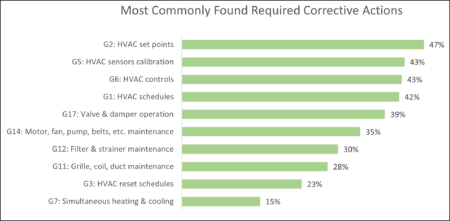
Compliance takes time, often between 6 and 12 months, and many owners use the grace period to complete implementation and verification of required corrective actions. Initiate conversations with your customers now to ensure there is adequate time to complete the on-site building assessment and follow through on required corrective actions. HVAC operations dominate the most commonly found deficiencies. Many including HVAC set point adjustments and sensor calibration fixes were identified and made in nearly half of all Tune-Ups submitted to date.

Owners of smaller buildings must meet the new Tune-Up mandate, April 1, 2021 for Cohort 3 buildings (70,000 to 99,999 square feet) and October 1, 2021 for Cohort 4 buildings (50,000 to 69,999 square feet). In addition to saving energy and water, conducting a Tune-Up can also help with preparing your building for operation during and/or after the COVID-19 pandemic.

All work associated with a Building Tune-Up must be done by a qualified Tune-Up Specialist, the experienced professionals responsible for conducting the building assessment, identifying required Tune-Up actions, performing those actions, verifying the work is done correctly, and submitting a report to the City.

As a certified Level II Building Operator (BOC), you’re well on your way to qualifying as a Tune-Up Specialist. Tune-Up Specialists must have least seven years of experience, including educational and/or professional experience, with commercial building operations and/or building energy management AND have one of the following certifications:

  • Professional Engineer (PE) in mechanical or architectural engineering
  • Building Operator Certification (BOC) Level II
  • Certified Energy Manager (CEM)
  • Certified Commissioning Professional (CCP)
  • Commissioning Authority (CxA)
  • Existing Building Commissioning Professional (EBCP)
  • Sustainable Building Science Technology Bachelor of Applied Science (BAS)

The Northwest Energy Efficiency Council (NEEC) has a directory of qualified Tune-Ups Specialists. If you meet the qualifications of a Tune-Up Specialist and would like to be a part of this list, please submit a Tune-Up Specialist registration via the Seattle Services Portal.

If you’re a Tune-Up Specialist looking for literature or information to share with your clients about the program and its requirements, feel free to use the Tune-Ups Fact Sheet and Owner’s Guide.

For inquiries or questions, please email [email protected] or call 206-727-8863 (TUNE). To learn more about Seattle Building Tune-Ups, visit www.seattle.gov/buildingtuneups.


Filed Under: Resources

Webinar: Ask the Lighting Experts: Energy Savings Potential from Luminaire Level Lighting Controls and Network Lighting Controls, Nov 12th

November 3, 2020 By SBC staff

Thursday, November 12th
10:00 AM – 11:00 AM PT
Register Now

As LEDs become more and more standard, the industry is turning its eye to next generation lighting technologies to uncover new opportunities for energy savings. Currently, connected lighting comprises less than 1% of all luminaires in the United States, but the Department of Energy (DOE) estimates that it can provide up to one quad of energy savings by 2035. That’s equal to one-fifth the U.S. commercial sector energy use.

A new research study from the Northwest Energy Efficiency Alliance (NEEA) and DesignLights Consortium (DLC) details how Networked Lighting Control Systems both with and without LLLC (luminaire level lighting controls) can create truly smart buildings with enhanced flexibility and deliver significant energy savings. The 1-year study updates and expands upon previous 2017 research by evaluating nearly 200 systems in building types from educational facilities to warehouses, office buildings and more.

Join us as experts from the Northwest Energy Efficiency Alliance (NEEA) and Design Lights Consortium (DLC) unveil the results and discuss the study’s implications for the future of commercial lighting. Register here.

Filed Under: Webinars

Case Study – Sunfresh Foods Freezer Upgrade

October 22, 2020 By SBC staff

Sunfresh Foods Inc. is a small, locally owned company based in Seattle that has coined the term “Freezerves” to describe their signature freezer jam product.

The Sunfresh processing facility is an approx. 10,000 sq. ft. pre-fab concrete building built in the 1970s. Sunfresh wanted to reduce their high electricity bills and identified their extremely inefficient refrigeration systems as the biggest opportunity for improvement. Before beginning the project, they reached out to the Energy Conservation Program at Seattle City Light (the local utility) about possible incentives. City Light was able to provide a substantial rebate, making it cost effective for Sunfresh to upgrade to a new system. The new system achieves high energy efficiency while helping Sunfresh also attain the attendant social benefits of saving energy.

How did the Smart Buildings Center help?
City Light asked Bob Brennand of Energy Smart Industrial (ESI) to help with measurement and verification (M&V) of the actual energy savings to determine the amount of the incentive.

The ESI program, sponsored by Bonneville Power Authority (BPA), helps utility customers and their industrial end-users achieve cost-effective energy savings.

Bob borrowed the Dent ElitePro XC logging power meters from Smart Buildings Center’s Tool Lending Library to measure consumption data after the upgrade, and the results were very impressive.

To continue reading, please download the full case study.

  • Sunfresh Case Study (PDF)


Filed Under: Resources, Tool Library

Posts pagination

Previous Page 1 … Page 33 Page 34 Page 35 Page 36 Page 37 … Page 47 Next

Help fund our Education Program

DONATE TODAY

Sign up for updates

Join the Smart Buildings Center mailing list for information about events and smart buildings news.

Your email has been added to the Smart Buildings Center mailing list for information about events and smart building news.

News & Articles

SBX 2026 Sponsorship Opportunities

April 1, 2026

OBEP Fellowship Case Studies Series, McMinnville Community Center

March 30, 2026

Celebrating the First Cohort of BEACON Fellows

March 26, 2026

Facilities Expos in April!

March 25, 2026

CalFlexHub 2026, April 15

March 23, 2026

Contact Us

Smart Buildings Center
Pacific Tower
1200 12th Ave. S., Suite 110
Seattle, WA 98144

206-538-0832

[email protected]

Smart Buildings Center is a project collaboration with Building Potential


Smart Buildings Center · Pacific Tower, 1200 12th Ave. S., Suite 110, Seattle, WA 98144 · 206-538-0832

© 2026 · Northwest Energy Efficiency Council