Join us for the Smart Buildings Exchange 2026!

Smart Buildings Center

Energy Efficiency Innovation Center, Tool Library & Data Visualization

  • About
    • Staff
    • Board of Directors
    • Contact
    • Donate
  • Partners
    • Partner Benefits
  • Tool Library
    • Browse Inventory
    • Case Studies
    • Lending Library Policy
    • Customer Agreement
    • Tool Resources
  • Use Our Space
    • Training/Event Space
    • Large Conference Room
  • Training
    • Building Operator Certification
    • Remote Learning Calendar
    • Remote Learning Library
    • Qualified Energy Manager Training
  • Resources
    • Clean Buildings Performance Standard Helpdesk
    • Building Efficiency and Clean Operations Network (BEACON) Fellow Project
    • K-12 Ventilation & Indoor Air Quality Resources
  • Compliance
    • WA State Clean Buildings Performance Standard (CBPS)
    • City of Seattle Benchmarking Helpdesk
  • Events
    • SBX Conference
  • Blog

Announcing Fourth Smart Buildings Week Virtual Session: Creating Intelligent Spaces, September 18th

August 11, 2020 By SBC staff

We are excited to announce the fourth and final session for Virtual Smart Buildings Week on Friday, September 18th. This session on “Creating Intelligent Spaces” will close out the week of free lunch-hour sessions covering engaging topics including Using Data and Analytics to Improve Performance, Grid Enabled Efficient Buildings, and Achieving Persistent Operational Performance. These one-hour sessions each qualify for 1 Building Operator Certification (BOC) credential maintenance point and 0.10 IACET CEUs towards the renewal of industry certifications, certificates and licenses including but not limited to AIA, PE, LEED, IFMA, ASHRAE, and AEE. View the full Virtual Smart Buildings Week schedule and session descriptions here: https://smartbuildingscenter.org/smart-buildings-week/

Smart Buildings: Creating Intelligent Spaces
September 18th, 2020, 12:00 – 1:00 PM

The Internet of Things (IoT) is transforming the world, including the built environment. This transformation is already underway leading to improved organizational productivity, better space utilization, and more efficient and healthier buildings. To make this transformation successful, it’s important to both understand the technology and practices as well as the cross-organizational nature of adopting smart projects. Microsoft has keen insight here based on its own adoption of smart technologies at their buildings as well as through close working relationships with its partner ecosystem. Microsoft will share a number of key considerations that can help building owners and operators make a successful transformation to buildings that are more agile, flexible, efficient, and productive.


Speaker: Spyros Sakellariadis, Microsoft

Spyros is an IT professional focused on defining and developing innovative solutions that impact the way people do things. He’s currently working on smart buildings and places around facilities operations, occupancy, security, and all things sustainability – carbon/energy, water, and waste management – leveraging technologies like IoT, real time analytics, big data, field service/workforce management, and frontline worker support.

Spyros holds degrees from the University of Oxford (Physics and Philosophy) and Pittsburgh (History and Philosophy of Science), and has worked in many fields, including defense contracting, export trading, leasing, and AIDS research. He started a computer company aeons ago, sold it to Wang, went into Internet application hosting before it was a ‘thing’, and finally saw the light and joined Microsoft in 2003. Spyros has published multiple articles in trade journals, and holds several patents.

Register now for the engaging virtual panel discussions during Smart Buildings Week!

Filed Under: Featured Event, SBX, Smart Buildings Week

Virtual Smart Buildings Week Replaces In-Person SBX2020 Conference

July 14, 2020 By SBC staff


Due to the uncertainty surrounding holding large events during the COVID-19 pandemic and with the health, safety, and well-being of attendees as our top priority, the Smart Buildings Center is postponing the in-person Smart Buildings Exchange (SBX) Conference & Tradeshow until August 24th & 25th, 2021. The event will remain at the Bell Harbor Conference Center in downtown Seattle, and any tickets purchased for the 2020 dates will be honored for the 2021 dates or may be refunded. A special thank you to SBX event sponsors, Advisory Committee members, and session speakers for your understanding and flexibility as we make this shift. Although we are disappointed we are unable to hold the in-person event this year, we look forward to convening the industry in the summer of 2021 to cover the robust agenda topics we have developed while also enjoying outdoor socializing and networking.

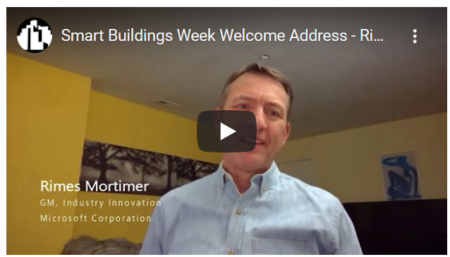
In place of this year’s planned in-person event, we are hosting a free Virtual Smart Buildings Week September 14th-17th, 2020. Each day during the lunch hour, a virtual session crafted from key topics and speaker commitments for our planned in-person event will feature a lively and interactive panel discussion as outlined below. Registration for the first three virtual sessions on September 14th, 15th and 16th is now open and details for a fourth session on September 17th will be announced soon. These one-hour sessions each qualify for 1 Building Operator Certification (BOC) credential maintenance point and 0.10 IACET CEUs towards the renewal of industry certifications, certificates and licenses including but not limited to AIA, PE, LEED, IFMA, ASHRAE, and AEE.

Smart Buildings: Using Data and Analytics to Improve Performance
September 14th, 2020, 12:00 – 1:00 PM
This session brings together two leading local smart service providers and two facility directors who have real world experience bringing smart solutions to their buildings. Designing for optimal performance is no guarantee that it will happen. The ability to acquire system performance data is no guarantee that the data will trigger operational improvements. In these two case studies, buildings that should have been “top of their game” needed a new approach. Attendees will hear how ATS Automation and DB Engineering intervened to help facility directors collect relevant data from installed building systems, use analytical tools to provide insights into performance problems, and then – most importantly – help those facilities take action. The results speak for themselves. Improved energy performance that is persisting over time.

Moderator:

  • Stan Price, Smart Buildings Center

Panelists:

  • Pete Segall, ATS Automation
  • Trevor Sodorff, DB Engineering
  • Tim Wingert, CBRE
  • Keith Berkoben, Google

Smart Buildings: Grid Enabled (and Efficient) Buildings
September 15th, 2020, 12:00 – 1:00 PM
Grid enabled buildings (GEB) are equipped with technologies for load management that can respond to dynamic conditions in the electric grid. GEBs are generally more efficient (HVAC, lighting, envelope, appliances), connected (hardware and software), smart (data and analytics), and flexible (loads, generation, storage). In an environment where hardware is increasingly attractively priced and a plethora of data is available, building owners are able to provide a significant benefit to a utility’s growing portfolio of resources and play a creative role in meeting its resource capacity needs in real time and for the long term. GEBs also offer the owner the additional value proposition of taking more control of their utility costs.

An expert, national panel will describe the key features of GEBs and outline the value streams that accrue to both the building owner and the serving utility in creating this grid enabled relationship. The panel will discuss both the technology required to create a two-way communication condition as well as the cost and benefits to all the parties in making GEBs a reality.

Moderators:

  • Ben Levie, Seattle City Light; Mark Lenssen, Puget Sound Energy

Panelists:

  • Alexi Miller, New Buildings Institute
  • Cara Carmichael, Rocky Mountain Institute
  • Mark Frankel, Ecotope
  • Mary Ann Piette, Lawrence Berkeley Laboratory

Smart Buildings: Achieving Persistent Operational Performance
September 16th, 2020, 12:00 – 1:00 PM
Facility energy performance and operations are often in direct conflict. It’s tough to hear, but the scales are not balanced for building owners or operators. Social pressure, building codes and new legislation are pushing EUI targets lower and lower. Advanced energy systems and smart building controls tease easy answers during initial design and construction, but the harsh reality is that designing an efficient building does not translate to operations success and often only adds to reactive practices, deferred maintenance and risk. In most cases, operators are not prepared to take on complicated building systems and new-to-them technologies. With inadequate training or resources, overtaxed staff override system settings to simply make it work. The result inadvertently drives up energy consumption and negates all efforts to optimize energy performance during design and construction while reducing asset life and introducing unnecessary risks.

The transition to smart and sustainable operations offers a best practice that balances the scales between energy expectations and operational realities. Panelists will outline proven approaches on actual projects that bridge design, build, train, optimize to ensure current energy requirements are effective and met.

Moderator:

  • Ric Cochrane, McKinstry

Panelists:

  • Mike Kowalick, South Landing EcoDistrict
  • Roy Buchert, Kaiser Permanente
  • Norm Menter, University of Washington

Register now for these engaging virtual panel discussions during Smart Buildings Week!

Filed Under: Education & Training, Featured Event, SBC News, SBX, Smart Buildings Week

The Continuum of Smart Buildings

February 26, 2020 By SBC staff

The following article recently published in the latest edition of the Building Operator Certification Bulletin highlights some of the key topics that will be the focus of the Smart Buildings Exchange conference tracks including: Grid Enabled Buildings, Wellness & Productivity, Transportation, Smart Network Design & Cybersecurity, Energy & Operations, Data/Analytics, Development & ROI, Carbon Reduction, Workforce Readiness, and Smart Building Infrastructure. We’re excited about the conference program and can’t wait to share agenda details with you soon, so stay tuned! Early-bird registration is open through April 15th — register now and save $100!


The Continuum of Smart Buildings

The buildings industry is abuzz with talk about “smart buildings” and their promise for improving operational efficiency and occupant comfort while reducing the carbon footprint. Technology continues to evolve at a rapid pace, automation touches every corner of our lives, and climate concerns continue to grow. Buildings use about 40% of our total energy in the U.S., and it is inevitable that automation to enhance efficiency is expanding into every corner of buildings as well. Building owners and organizational leaders are taking note of the possibilities that smart technologies present, since energy consumption accounts for about 20% of operational costs across most industries. An increased focus on occupant experience and resultant productivity gains is also driving this transformation.

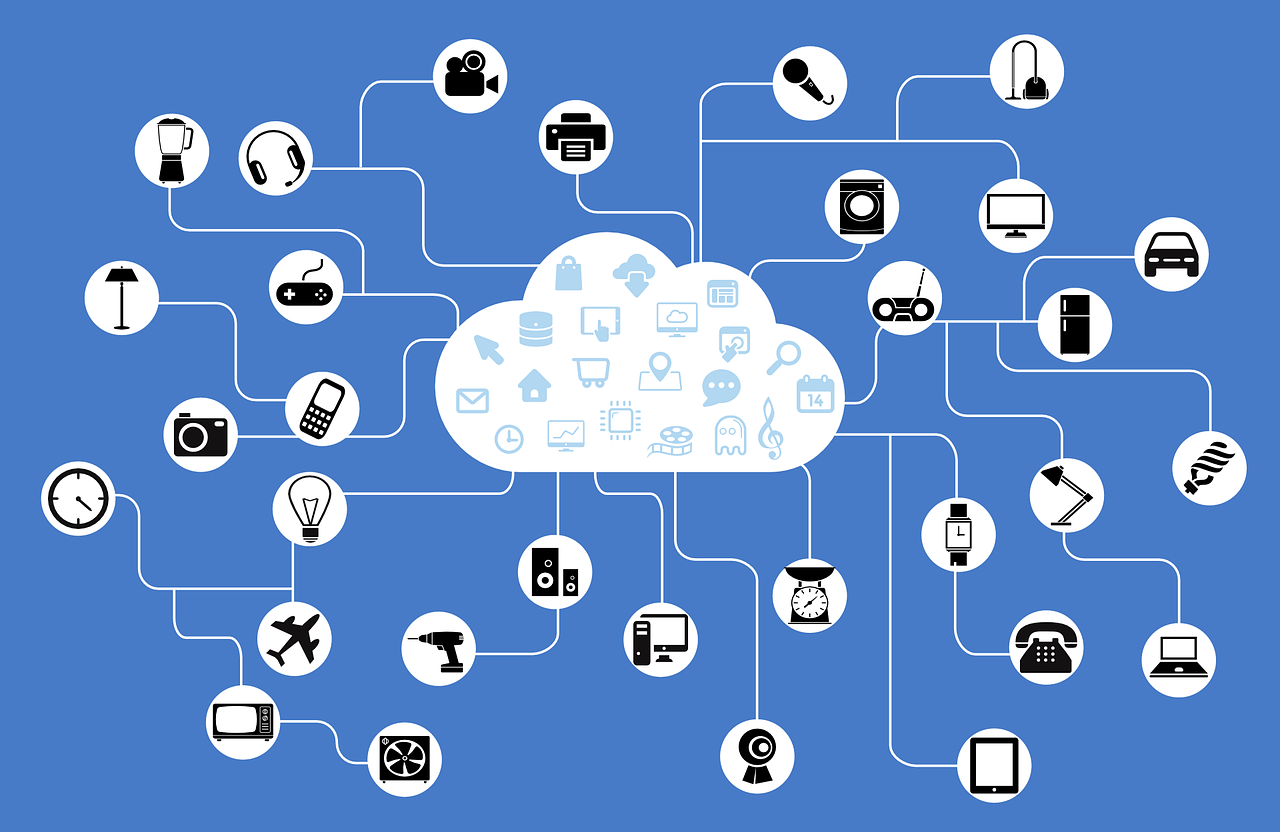
Image by Tumisu from Pixabay.

So, what is a smart building? Smart buildings integrate data information and communication technologies to connect previously independent systems together, optimizing operations and whole-building performance. Smart buildings can also communicate with the power grid, which is becoming increasingly important as utilities look for ways to accommodate increasing energy needs and the growing incorporation of distributed energy resources (DER) such as solar and wind energy production.

This evolution toward automation in buildings doesn’t decrease the need for human interaction; buildings will always need operators. But with the changing landscape in building operation, required skill sets are also expanding. Understanding smart technologies and their components, in relation to long-established building science concepts, is key for building operators to maintain their edge in the industry and ensure robust, sustainable career opportunities.

It is also important to understand that the term “smart buildings” doesn’t only apply to the newest, fanciest buildings designed with state-of-the-art technology. Most of our existing building stock consists of aging, inefficient buildings, which provide ripe potential for improvements that can lead to vast savings. Smart technologies and strategies can be applied in any building and can be scaled over time. Because you can’t save what you don’t measure, this starts with paying attention to whole building energy use and benchmarking with free tools like Energy Star Portfolio Manager, which can help identify the energy use profile for the building and specific systems to target for improvement. Portable submetering equipment can be employed short-term to get a snapshot of what is happening with specific systems. This type of equipment is becoming more widely available, often for free, from energy diagnostic tool libraries located in many parts of the country.

As a clearer picture emerges of where the opportunities exist, further movement along the continuum of smart can happen, such as integrating sensors and more advanced control systems. To deepen the impact, systems can begin to be integrated. For example, instead of HVAC controlled by a thermostat located on the wall away from the occupants themselves and separate lighting controls, all these controls can be integrated into the lighting fixture itself (including occupancy and daylighting sensors). This strategy can provide more accurate information for the building control systems to condition and light the spaces that need it, but only when they need it. Smart technologies can also give occupants more control over their immediate environment, resulting in higher productivity.

Image by jeferrb from Pixabay.

Analytics, a term for tools that analyze data to create actionable value by detecting patterns, trends, and deviations, can identify inefficiencies that might otherwise never be noticed, such as simultaneous heating/cooling, degradation of heating or cooling performance, improper economizer function, uncalibrated or malfunctioning sensors, anomalies with set points, etc. These types of solutions are often integrated into virtual private networks in the cloud, which minimizes the front-end liabilities and security risks that many operators and managers worry about with adoption of these strategies.

A notable smart buildings strategy is automatic fault detection and diagnostics (AFDD), which can have many benefits that extend beyond energy savings. Instead of spending hours troubleshooting issues, technologies like AFDD can save technicians valuable time and minimize risk by pinpointing the exact issue. Time saved here can be used to tackle that list of deferred maintenance that nearly every building operator has on their plate, which in turn can save energy and extend equipment life. AFDD can also help to predict issues before they happen, reducing hot/cold calls, deferring capital expenditures, and preventing catastrophic failures and downtime.

Recognizing the need to stay on top of this evolving landscape in building operation, the Smart Buildings Center and Building Operator Certification program are developing educational programming and resources for the community to enhance understanding about the components of smart buildings. For example, BOC is developing a Smart Buildings Fundamentals one-day supplemental class that will be rolled out later this year. This will cover concepts such as IT networks and security, systems and system integration, analytics, and operational strategies. And in September 2020, the Smart Buildings Center will be presenting our inaugural Smart Buildings Exchange conference in Seattle, to continue the conversation and give a comprehensive look at the broad spectrum of smart buildings technologies (and their inherent benefits) emerging in the marketplace.

Filed Under: SBX

Smart Tech for Buildings Summit Recap

February 3, 2020 By SBC staff

ATS Automation sponsored a well-attended and informative Smart Tech for Buildings Summit on Thursday (1/30) in Seattle. Smart Buildings Center (SBC) staff attended all the sessions and were impressed by the quality of the speakers. The summit started with a primer on smart buildings and helped ground us all in both terminology and in the issues that are part of the here and now of smart buildings. Lucy Gedney of ATS promised that the sessions would focus on three of the pillars associated with the International Well Being Institute’s “well standard” – air, light, and comfort. The summit delivered on that promise.

One overarching theme throughout the summit was that occupant experience is becoming more and more at the forefront in the design and operation of buildings. But, tenant comfort, energy efficiency, and equipment life extension are not mutually exclusive; in fact, smart buildings technology makes it possible to achieve all of these benefits.

Melanie Danuser, Britton Rife, and Melissa Sokolowsky exhibiting at the Smart Tech for Buildings Summit

Jennifer Wagner of Onsite, LLC gave an impressive presentation documenting her research on the value of data driven solutions to infection prevention and control in hospitals. In other sessions, speakers presented data showing the improvements in occupant satisfaction, test scores, and worker productivity in commercial and education settings.

A very nice session on data analytics drove home the opportunity and challenge of collecting, storing, analyzing, and – most importantly – acting on the information derived from the analysis of building performance data. A representative from Amazon described their Alexa for Business products which reduce the annoying downtime associated with meeting room start up procedures – a ubiquitous frustration for us all. A representative from Roby explained how the Roby AI workplace concierge can help improve tenant satisfaction and operational efficiency by streamlining facility management requests through their app.

Throughout the summit speakers offered assurance that even with smart technology’s inherent ability to automate processes, there will always be a need for human interaction in the operation and maintenance of buildings. We appreciated the event for its content as SBC plans to build out a Smart Buildings curriculum and credential through the Building Operator Certification program. The session content framed the progress in the field of smart buildings and how it impacts the knowledge and skills facilities professionals need to succeed in an industry that is transforming as smarter technologies and practices are being deployed in buildings.

In the end, the summit offered attendees the opportunity to connect with others in the industry to share best practices and lessons learned from implementing smart technologies and practices. The event also served as an inspiration for the now-under-development agenda for SBC’s Smart Buildings Exchange (SBX 2020) conference scheduled for September 2nd-3rd at the Bell Harbor Conference Center in Seattle. The SBC in tandem with a growing list of sponsors – which now includes McKinstry, Siemens, Seattle City Light, Puget Sound Energy, MacDonald-Miller, ATS Automation, and BOMA – is using this conference to expand on many of the themes heard at the ATS summit. Focusing on today’s issues of why, what, and how in the smart buildings space, this conference will be of interest to building owners and managers, facility professionals, engineers, architects, utilities, government, and energy efficiency professionals. Event registration is now open. We hope to see you there!

Filed Under: Featured Event, SBC News, SBX

Smart Buildings Exchange Early-Bird Registration Open!

January 9, 2020 By SBC staff

A limited number of early-bird tickets for Smart Buildings Exchange, September 2-3, 2020, in Seattle are now available — register now and save $100!

About the event
Buildings are digitizing. Throughout the built environment, new technologies are connecting building systems and occupants in ways that generate confusion, opportunity, challenges and concerns over risks. From enabling buildings to perform for occupants and owners in previously unimaginable ways, to leveraging buildings to accelerate smart cities and electrification of transportation for a cleaner and healthier Earth, the opportunities are countless and exciting. Smart Buildings Exchange brings together the key audiences to challenge the hype, bear witness to the innovation, and explore the business case for accelerating the adoption and commercialization of smart buildings technologies and practices.

Exhibitor & Sponsorship Opportunities
Smart Buildings Exchange
will host a boutique style exhibition highlighting industry leading vendors and sponsors that represent the Pacific Northwest vision for “smart” including the latest in smart building technologies and practices. Exhibitor & Sponsorship opportunities are limited — please download our Sponsorship Prospectus or contact [email protected] for more information about ways your organization or business can participate in the conference.

NEEC members get 15% off of registration! Be sure to reach out to [email protected] to receive your NEEC member discount code before registering.

Smart Buildings Exchange (SBX) 2020
September 2 – 3, 2020
Bell Harbor Conference Center, Seattle
https://smartbuildingscenter.org/sbx

Filed Under: Featured Event, SBC News, SBX

Big News from the Smart Buildings Center!

November 25, 2019 By SBC


We are very excited to share that we are launching an annual Smart Buildings conference in September 2020 in Seattle! The two-day conference and tradeshow will connect participants to the latest information and technologies in the smart buildings industry. We will showcase smart city and building projects and initiatives located in the PNW and will provide educational tracks to highlight the ‘why, what and how’ for smart buildings.

Smart Buildings Exchange (SBX) 2020
September 2 – 3, 2020
Bell Harbor Conference Center

For more information about ways that your organization or business can participate in the conference, please download our Sponsorship Prospectus or contact [email protected] for customized sponsorship/partnership opportunities.

NEEC members get 15% off of registration! Be sure to reach out to [email protected] to receive your NEEC member discount code before registering.

https://smartbuildingscenter.org/sbx


Filed Under: Featured Event, SBC News, SBX

Posts pagination

Previous Page 1 … Page 11 Page 12 Page 13

Help fund our Education Program

DONATE TODAY

Sign up for updates

Join the Smart Buildings Center mailing list for information about events and smart buildings news.

Your email has been added to the Smart Buildings Center mailing list for information about events and smart building news.

News & Articles

Early Bird Registration for SBX 2026 Ends in 2 Weeks!

July 29, 2026

Happening This Week: Meet Rebecca Sheppard, Senior Project Manager

July 29, 2026

Last Call for Call for Speakers! SBX 2026 Call for Speakers Deadline is Friday 7/17

July 15, 2026

SBX 2026: Keynote Announcement, Call for Speakers & Early-Bird Deadline

July 13, 2026

WA Commerce: District energy campus upgrades committee update

July 13, 2026

Contact Us

Smart Buildings Center
Pacific Tower
1200 12th Ave. S., Suite 110
Seattle, WA 98144

206-538-0832

[email protected]

Smart Buildings Center is a project collaboration with Building Potential


Smart Buildings Center · Pacific Tower, 1200 12th Ave. S., Suite 110, Seattle, WA 98144 · 206-538-0832

© 2026 · Northwest Energy Efficiency Council