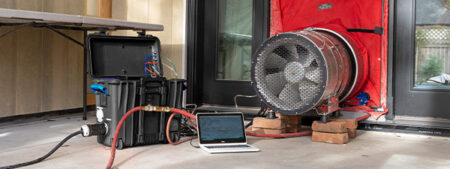
BetterBricks and IFMA invite you to learn about the latest advancements in windows, HVAC and lighting that can improve your building’s health and safety, and occupant comfort and wellness, while delivering significant savings on your energy bills. Our systems experts will present on recent research and pilot findings for a variety of technologies and solutions, including secondary windows, HVAC systems and design best practices, and Luminaire Level Lighting Controls.
Job Opportunites: Puget Sound Energy, Bothell, WA
Energy Efficiency Account Executive (3 openings)
PSE is currently seeking (3) Energy Efficiency Account Executives to help drive awareness and participation in our Commercial & Industrial Energy Efficiency programs. As an integral member of PSE’s Business Energy Management team, you will work with multiple internal PSE groups and third-party resources to engage with groups such as contractors, distributors, building owners, developers, property managers, as well as our commercial & industrial customers to develop energy efficiency projects over time. These three new positions are key to help achieve PSE’s two-year and long-term energy efficiency targets. View the full job description and application requirements.
Energy Management Engineer II (3 openings)
Puget Sound Energy’s Business Energy Management (BEM) group is looking for three (3) Energy Management Engineers to support the industrial energy management program, clean buildings program, and building performance team. You will work closely with customers to develop projects that produce sustainable energy savings. This work involves visiting customer facilities, evaluating energy consumption data, recommending energy efficiency measures to customers, calculating project energy savings, developing incentive documentation, and creating measurement & verification plans. View the full job description and application requirements.
Product Development Manager
PSE is currently seeking a Product Development Manager who will support our commercial and industrial energy efficiency programs. As an integral member of PSE’s Business Energy Management group, you will work with program managers to increase participation in PSE’s Energy Efficiency Programs, including: creation of a program and measure development process that leverages internal and external resources, match programs and measure development to evidence-based outcomes, streamline existing program design, create simplified programs for commercial and industrial customers, develop new standard and calculated measures. This position works in conjunction with cross-functional Energy Management staff. View the full job description and application requirements.
National Clean Energy Workforce Alliance Convenings
The National Clean Energy Workforce Alliance is a cross-sector effort to improve clean energy education, training, and job placement outcomes—and ensure that expanding clean energy job opportunities are inclusive of diverse candidates and underserved communities. The Alliance virtually convenes employers, training providers, community-based recruitment and support organizations, and energy justice organizations to identify and share resources and information and focus on concrete solutions to shared workforce challenges.
The National Clean Energy Workforce Alliance is co-convened by the Interstate Renewable Energy Council and the National Council for Workforce Education with support from Bank of America.
Upcoming Alliance Events and Registration
Sign up to join us on January 31, 2022 at 2 p.m. ET! All Alliance members are welcome, but our January meeting will specifically focus on the employer experience and needs.
Coming Soon! On March 3, 2022 at 2 p.m. ET, clean energy training providers are invited to join us to gain access to best practices and training provider resources and define curricular and other needs to build the next generation of workers.
And then in April: Community-based energy justice and other organizations supporting workers and learners are invited to inform the Alliance’s work to develop a robust and diverse workforce in communities across the nation.
‘Why Smart Buildings?’ Executive Forum
Building Electrification & Grid-Interactive Efficient Buildings
Thursday, February 17th & 24th
12:00 – 1:15 pm PT
Register Here!
Certainly, increasing building electrification (BE) is a critical step toward decarbonization of the built environment. The specific steps to achieve BE are somewhat less certain. Replacing carbon-emitting fossil fuel appliances with clean electric sources is the easy answer, but as usual there are lots of complexities in making this happen in both commercial and residential buildings – new and existing. During the Smart Buildings Exchange (SBX) 2021 virtual conference, two technical sessions on grid-interactive efficient buildings (GEBs) highlighted the potential values of deploying dynamic two-way communication capacity in buildings to both the electric utility system and building owners and managers. This two-way communication can automate load shifting, shedding, and modulating and improve a utility’s capacity, resiliency, and cost. Building on the SBX 2021 conversations, this two-part Executive Forum discussion will link the efforts around BE to successful widespread deployment of GEBs.
Part 1 of this series will bring together expertise from the policy, regulatory, ratemaking, and utility industries to discuss their view on what must change from current practice to ignite a robust market for GEBs. Like most SBC events, this Executive Forum will be structured as an extemporaneous discussion between panelists (with a twist – see note on format below). Sure to be a dynamic and engaging discussion, this panel will tackle issues such as:
- Building electrification – the role that GEBs need to play to allow for optimizing utility capacity management/coincident peak management (the context being, can building electrification succeed without some form of GEBs)
- Grid modernization – everyone agrees that it needs to happen and that it will be expensive. Do GEBs offer a least cost approach to modernization that will enhance reliability/resilience?
- Are GEBs a complement to the Northwest’s emerging energy imbalance market – are the two compatible?
- Why aren’t GEBs evaluated as a resource in the 8th Power Plan?
- Are GEBs more realistic/helpful to the utility system in the residential or the C/I sector?
- What scale is necessary for GEBs to be a real solution?
- What rate reforms are needed to make GEBs work?
- What policy/regulatory reforms are needed to make GEBs work?
Part 2 of this series will feature a panel drawn from the communities of building owner/manager, developer, service provider and research institutions to discuss the market side of this equation. Of course, there has to be a market-based value proposition for the BE-GEBs solution to decarbonization and this group will take that question head-on. Again, expect a dynamic conversation amongst the panel addressing core issues, such as:
- Who is responsible for triggering market adoption – utility-customer-third party-government/regulator?
- Will dynamic rate structures be sufficient to move the market or are some types of financial incentives also needed?
- Are GEBs only realistic for new construction?
- If the future of commercial buildings is variable occupancy does this help or hurt GEBs deployment?
- How critical is the inevitability of EV charging to GEBs?
This FREE two-part virtual series is targeted to building owners/managers, developers, utilities, service providers as well as those with interest in or responsibilities for policy and regulatory changes related to decarbonization.
Ever been frustrated that your question didn’t get addressed by a panel because they ran out of time? Submit your questions ahead of time during registration and we will tailor the conversation to match your information needs!
Register Here!
Strategic Energy Management in Higher Education Facilities: COVID and Beyond
January 26, 2022
1-2 pm PT
REGISTER
Smart Buildings Center is excited to announce the next event in our ongoing series of Commercial Strategic Energy Management (CSEM) webinars, produced in partnership with Puget Sound Energy.
In this interactive webinar, panelists with expertise in strategic energy management (SEM) in higher education facilities will discuss their lessons learned in navigating the challenges of operating their buildings safely during the COVID-19 pandemic. They’ll also share insights for moving forward with a re-focus on energy efficiency, in light of the challenges presented by climate change and resulting mandates such as the WA Clean Buildings Performance Standard (H.B. 1257).
Register in advance for this webinar. After registering, you will receive a confirmation email containing information about joining the webinar.
Understanding the WA Clean Buildings Standard
The Clean Buildings Standard is one measure Washington State is taking to improve building operational efficiency. Propelling buildings to targeted energy use intensity by building type and size, all commercial buildings over 50,000 sf will need to comply by 2028 (220,000 sf by 2026), and then maintain compliance or be subject to penalties.
UMC, Hargis Engineers, and the Northwest Energy Efficiency Council (NEEC) have joined forces to break down the Clean Buildings Standard’s options and implications so you can define a path forward that aligns with your portfolio. [AIA CEU HSW 1.5 Credit]